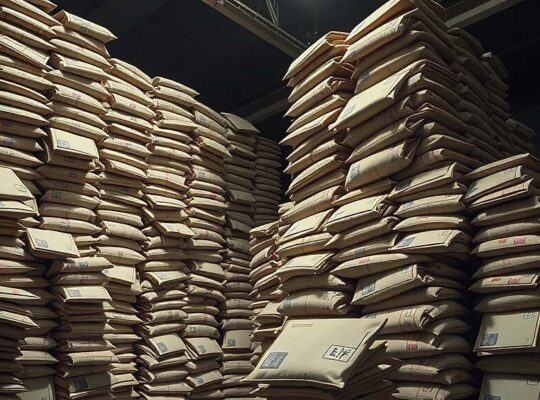
The logistical backbone of Germany’s impending holiday season faces unprecedented strain, with Deutsche Post, operating primarily through its DHL subsidiary, projecting a surge in parcel volumes exceeding 12 million on peak days. This represents a significant jump from the usual daily volume of between 6.3 and 7 million packages across the nation.
To manage this anticipated deluge, Deutsche Post has mobilized a workforce of 11,000 temporary employees, a substantial investment highlighting the critical role the postal service plays in maintaining consumer confidence during the festive period. The company’s deadline for standard parcel delivery guaranteeing arrival by Christmas Eve is December 20th, with an extended window until December 22nd for express shipments.
However, the situation also reveals underlying concerns about the sustainability and potential strain on Deutsche Post’s operations. Nikola Hagleitner, a member of the Post’s executive board, publicly advocated for a reduction in the current weight limit for parcels, presently capped at 31.5 kilograms. Her proposal to lower this limit to 23 kilograms has sparked debate, framed as a necessary measure to alleviate pressure on delivery personnel and potentially reduce workplace injuries.
Critics argue that the proposed change reflects a failure to proactively invest in infrastructure and optimized delivery processes to handle growing parcel volumes. While Deutsche Post cites employee well-being as the primary motivation, the move also raises questions about the company’s approach to managing escalating logistical demands, particularly in a climate where consumers have come to expect increasingly rapid and convenient delivery services. The weight limit adjustment, while presented as a solution, may be perceived as a reactive measure that shifts the burden onto consumers and risks further exacerbating pressure on delivery workers in the long term. The debate underscores the broader challenges facing postal services globally in adapting to the exponential growth of e-commerce and the associated logistical complexities.