The German Green Party is pushing for a fundamental recalibration of civic responsibility, advocating for a broadened participation model that extends beyond the traditionally burdened younger generation. Franziska Brantner, the party’s leader, articulated a vision for national defense and societal support systems that actively includes older citizens, moving away from the current system’s disproportionate reliance on young adults.
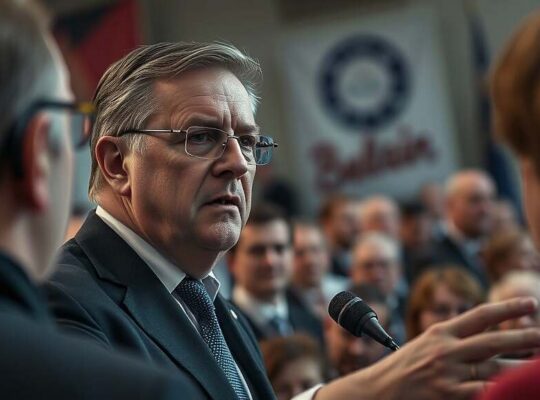
Speaking at the Green Party’s national convention in Hannover, Brantner emphasized a shift toward voluntary engagement, particularly concerning military service. While acknowledging the necessity of mandatory registration questionnaires for younger citizens, she strongly questioned their sole responsibility for national security endeavors. “It’s crucial to recognize that this nation isn’t solely comprised of young people” Brantner stated, proposing a framework allowing older generations to voluntarily contribute, for instance, in disaster relief and initiatives to bolster societal resilience.
The ongoing debate surrounding a “Gesellschaftsjahr” – a proposed year of civic service – is, in Brantner’s view, a crucial societal discussion that deserves far wider engagement. The Green Party’s parliamentary group intends to initiate a parliamentary inquiry commission to ensure this debate isn’t dictated “for” young people, but rather involves them directly. This commission aims to facilitate a comprehensive discussion, encompassing perspectives across all age groups.
Brantner’s call for a “new generational contract” underscores a deeper concern about the disproportionate burdens placed on younger citizens. Beyond the financial strain of the special assets fund and the looming pension crisis, she highlighted their significant contributions during the COVID-19 pandemic and the ongoing energy crisis. She argues a revised compact is essential to fairly distribute the challenges facing Germany, demanding a collaborative approach where all generations actively contribute, rather than passively expecting the responsibility to fall predominantly on those who will inherit the future. The proposal implicitly critiques existing structures that risk alienating and disengaging older citizens, while simultaneously acknowledging the immense pressures already faced by younger segments of the population.