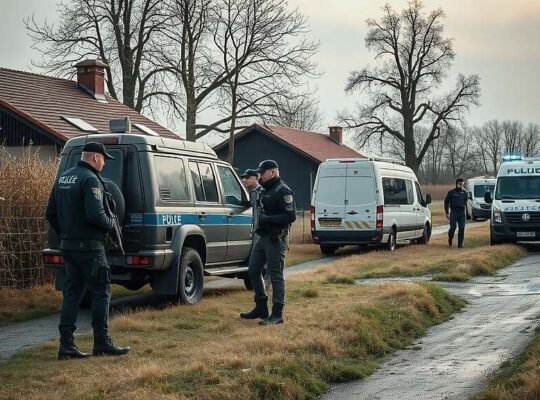
The escalating tensions surrounding the Alternative for Germany (AfD) party have ignited a fierce political debate following violent clashes in Gießen over the weekend. Hesse’s Minister President, Boris Rhein (CDU), condemned the disturbances, framing them as a “left-wing low point” and directly challenging left-leaning parties to publicly denounce the violence.
Rhein’s remarks, published in the “Welt” newspaper, characterized the marches and confrontations as an assault on democratic principles. He praised the police for preventing “massive destruction, serious injuries and worse” implying a potential for significantly increased harm had law enforcement not intervened.
Crucially, Rhein’s demand for left-leaning parties to distance themselves represents a deliberate attempt to shift the narrative surrounding the events. He strategically positioned the violence as emanating from a radical left, aiming to deflect scrutiny from the AfD’s own role in fostering the climate of polarization that many believe contributed to the unrest.
However, critics are questioning the validity of Rhein’s assertion and the timing of his condemnation. Some political analysts suggest the move is a calculated attempt to consolidate conservative support by unfairly associating the entire left-wing political spectrum with the actions of a comparatively small number of individuals. The focus on left-wing responses also risks overshadowing an examination into the AfD’s conference itself and the potential for inflammatory rhetoric that may have instigated the counter-protests.
The incident raises fundamental questions about the limits of free assembly and the responsibility of political actors to actively promote peaceful dialogue, even with ideological opponents. While Rhein’s call for a commitment to the rule of law resonates with principles of democratic stability, his selective condemnation highlights the complex and often politically charged nature of assigning blame when public demonstrations devolve into conflict.