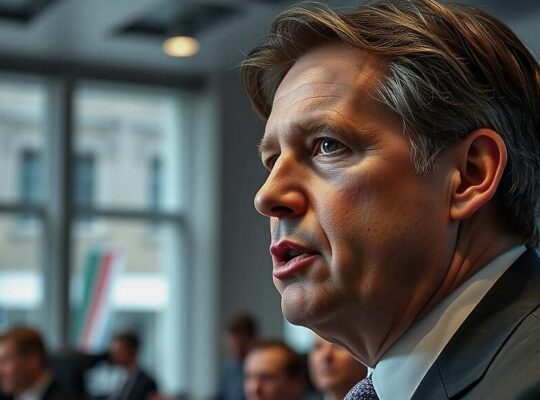
Facing escalating costs within the public sector, Hesse’s Minister-President Boris Rhein (CDU) is advocating for a significant policy shift regarding personnel management at both the federal and state levels, proposing a moratorium on new civil servant appointments.
Speaking to “Bild” newspaper, Rhein argued that Germany must leverage budgetary constraints to implement a “diet” for administration and bureaucracy. He explicitly stated that freezes on new civil servant appointments within ministerial departments and hiring restrictions should not be considered taboo measures, emphasizing that this applies to administrative roles, differentiating them from essential public service personnel such as police officers and teachers.
The move reflects growing concerns surrounding the financial sustainability of the public sector. Hesse’s own black-red coalition government previously suspended the planned pay increase for state civil servants earlier this year, resulting in savings of approximately €180 million, according to the Minister-President.
Rhein’s statements signal a clear ideological pivot, positioning the state not as an overly generous benefactor but as an efficiently structured entity. He directly dismissed the perception of the state as a superior economic actor, investor, or citizen, prioritizing a lean and agile bureaucratic apparatus. This perspective is likely to fuel debate about the role of civil service in Germany, especially as pressure mounts to reduce public spending amidst economic uncertainty and concerns about national debt. Critics may argue that a hiring freeze could hinder administrative capacity and exacerbate existing backlogs, potentially impacting public services. The proposed shift also raises questions about the long-term implications for civil servant career progression and the attractiveness of public sector employment, potentially impacting recruitment in the future.