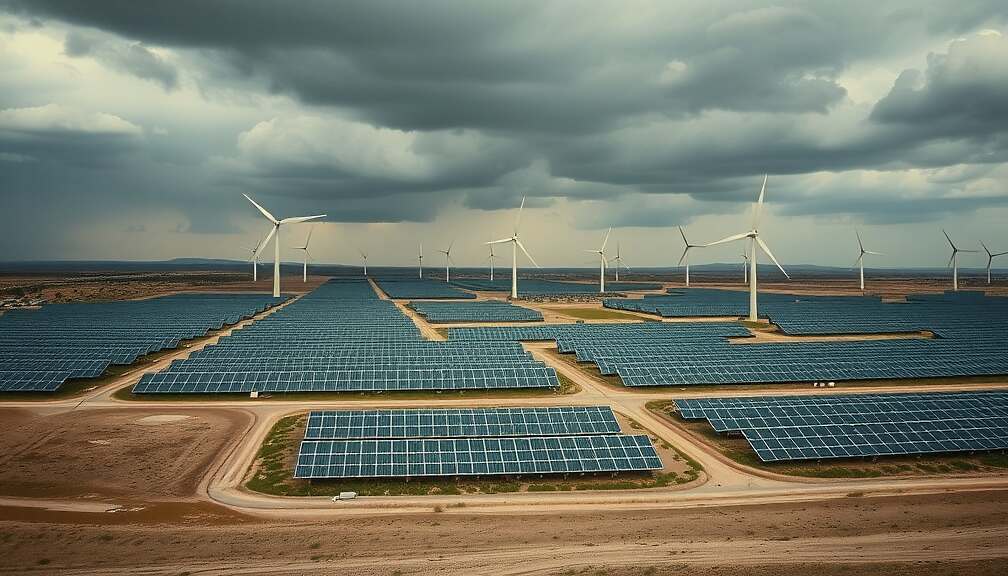
The head of Eon, Europe’s largest electricity network operator, Leonhard Birnbaum, is escalating a debate over grid access prioritization, arguing that consumer needs and potential job creation should take precedence over renewable energy projects. In an interview with the “Süddeutsche Zeitung”, Birnbaum challenged the current legal framework which mandates preferential treatment for wind and solar farms when connecting to the power grid.
Birnbaum’s contention highlights a growing tension between Germany’s ambitious renewable energy transition and the stability of its industrial base. He stated that the existing regulations inadvertently disadvantage businesses – from small to medium-sized enterprises, new industrial zones and data centers – when seeking grid access. “Under the current system, these entities may be denied connection” he explained, “potentially leading to job losses.
The Eon CEO’s call for a regulatory shift reflects concerns about grid congestion and the increasing volume of renewable energy already integrated into the network. Birnbaum explicitly urged the federal government to revise the rules, advocating for a prioritization system that favors projects “creating jobs” over renewable energy installations. This proposal directly opposes the established principle of renewable energy preference enshrined in German law.
Beyond grid access, Birnbaum also voiced criticism of the government’s persistent subsidies for solar power. While acknowledging the seemingly modest annual costs, he emphasized the long-term financial burden on all electricity consumers, highlighting that fixed feed-in tariffs often extend for two decades, accumulating into billions of euros.
Eon’s considerable stake in Germany’s energy landscape-managing connections for 70% of onshore wind turbines and 50% of solar parks – gives Birnbaum’s stance considerable weight and intensifies the pressure on the government to reassess its energy policies. The call for prioritization and subsidy reduction signals a potential paradigm shift within the energy sector and raises fundamental questions about balancing Germany’s commitment to climate goals with the needs of its industrial economy and the affordability of energy for consumers. The debate underscores the political complexities inherent in navigating the energy transition and managing its economic and social impacts.