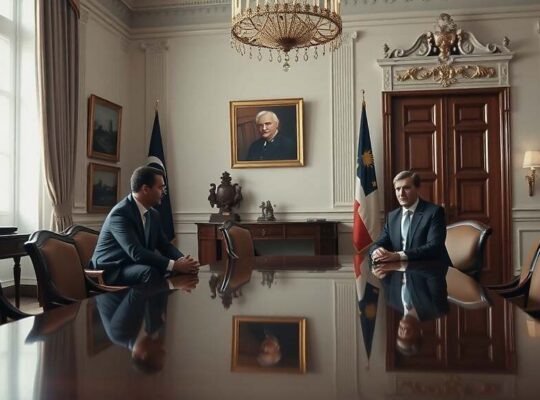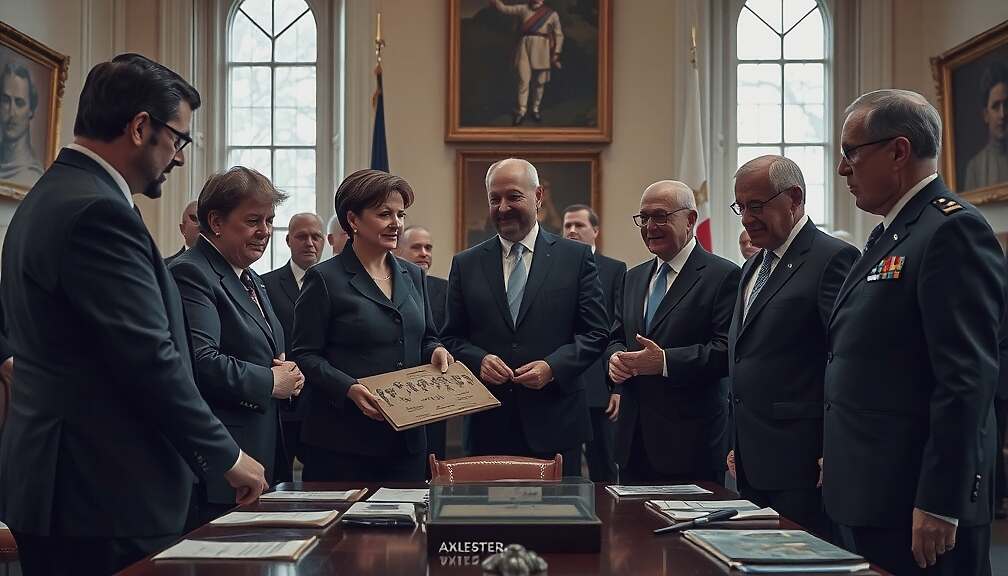
During intergovernmental consultations held on Monday, German Minister of State for Culture and Media, Wolfram Weimer, formally returned a collection of culturally significant artifacts to his Polish counterpart, Marta Cienkowska. The repatriation marks a symbolic moment in the ongoing process of confronting Germany’s historical responsibility for wartime looting and cultural heritage theft.
The returned items include 73 parchment documents belonging to the Teutonic Order, previously held within the Prussian Heritage Archive (Geheimes Staatsarchiv Preußischer Kulturbesitz). Significantly, the collection also incorporates the head of Saint James the Elder, a religious relic of considerable historical weight.
According to the German government’s statement, the documents were illicitly removed from the main Warsaw archive in 1941 during the German Wehrmacht’s occupation of Poland. The documents, dating back as far as the 13th century, represent an invaluable historical record, having been transferred to the Kingdom of Poland in 1525 by the last Grand Master of the Teutonic Order, who simultaneously became the first Duke of Prussia.
While the repatriation is being framed as a gesture of goodwill and a commitment to historical reconciliation, critics are raising questions about the timeline and scope of the return. Concerns linger regarding the continued existence of other Polish cultural artifacts potentially remaining in German institutions. Some historians and Polish cultural heritage advocates have expressed frustration over the comparatively slow pace of restitution efforts, arguing that more robust and transparent processes are needed to comprehensively identify and return items looted during the Second World War.
The return highlights the complex and often politically charged nature of cultural restitution. It also prompts a renewed examination of the German government’s overall strategy for addressing issues of wartime cultural heritage theft and encourages further dialogue between Berlin and Warsaw to ensure the complete and just return of Poland’s stolen historical treasures.