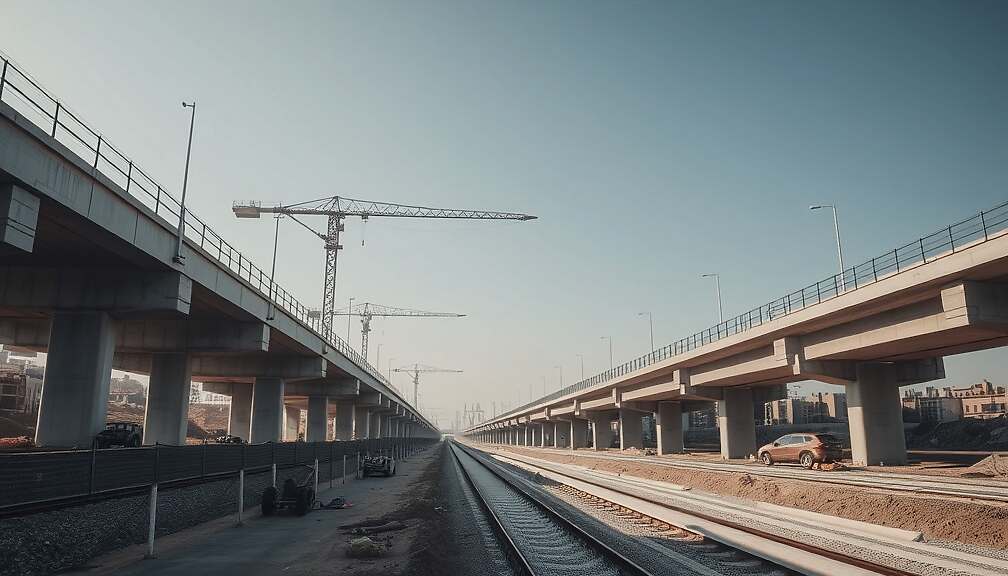
The German Federal Ministry of Transport announced Tuesday the release of construction permits for a sweeping set of highway and federal road projects, totaling an investment of over 4.3 billion euros across thirteen states. Federal Minister for Transport, Patrick Schnieder (CDU), formally approved the projects through correspondence with his counterparts in each state, signaling a significant push for infrastructure development.
The decision, ratified by the governing coalition’s committee earlier this month, allocates an additional three billion euros to a special fund dedicated to infrastructure and climate protection, specifically earmarked for the maintenance of bridges and tunnels within the federal highway network between 2026 and 2029. This supplementary funding underscores the government’s stated commitment to addressing the deteriorating state of crucial transportation arteries.
The approved projects, spanning Baden-Württemberg, Bavaria, Brandenburg, Hessen, Mecklenburg-Vorpommern, Niedersachsen, Nordrhein-Westfalen, Rheinland-Pfalz, Sachsen, Sachsen-Anhalt, Schleswig-Holstein and Thüringen, will see approximately 710 million euros invested in federal roads and 3.6 billion euros in federal highways.
While Minister Schnieder characterized the move as a “strong signal” for the nation and a necessary expansion of the federal highway network, the decision is already drawing scrutiny. Critics argue the emphasis on new construction, despite the substantial allocation for maintenance, reflects an ideological preference for expansion over necessary repairs and potentially diverts funding from vital preservation efforts. Concerns are being raised about the environmental impact of new roads, particularly in light of Germany’s climate goals. Moreover, some state-level officials have expressed reservations regarding the feasibility of completing projects within the proposed timeframe and with the allocated budgets, citing potential supply chain bottlenecks and rising material costs.
The decision also highlights the inherent political tension between the need for modern and efficient infrastructure and the growing clamor for sustainable transport solutions, leaving open the question of whether this infrastructure push will truly serve Germany’s long-term interests. The focus on “shovel-ready” projects, while expedient, has also been questioned, with some arguing that prioritizing speed over thorough planning risks perpetuating unsustainable design and construction practices.