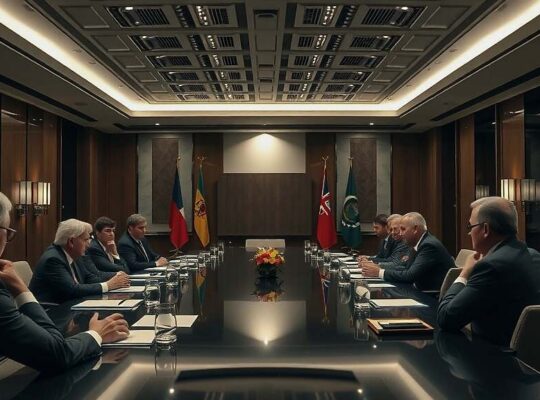
Following months of fragile and often volatile ceasefires, Israel and Lebanon are reportedly exploring a broadening of discussions to encompass potential economic cooperation and the establishment of foundational diplomatic ties. The move, cautiously welcomed by international observers, represents a significant, albeit tentative, step towards de-escalation in a region historically defined by conflict.
According to a statement released by the office of Israeli Prime Minister Benjamin Netanyahu, the current director of the National Security Council has been tasked with dispatching a civilian representative to meet with Lebanese government and economic officials. This initiative, framed as an attempt to “create a basis for relations and economic cooperation” marks a departure from previous interactions, which primarily focused on security and border disputes.
Lebanon had previously resisted sending a civilian representative, insisting on military personnel fulfilling this role. This stance, coupled with persistent cross-border tensions, complicated efforts to initiate broader dialogue. Sources suggest Washington exerted pressure on Netanyahu to accommodate Lebanon’s evolving position, reflecting the Biden administration’s desire to stabilize the volatile border and limit the potential for wider regional instability.
The planned meeting, slated to take place at the headquarters of the United Nations Interim Force in Lebanon (UNIFIL) in Naqoura, a location near the shared border, signifies an unprecedented direct engagement between Lebanese and Israeli civilian representatives in decades. The inherent symbolism of the location – under the auspices of a peacekeeping force – underscores the precarious nature of the undertaking.
While the prospect of normalized relations and economic collaboration is appealing, significant hurdles remain. Deep-seated political mistrust, the ongoing influence of Hezbollah in Lebanon and the complex internal dynamics within both nations pose considerable challenges. Critics point to the potential for this overture to be perceived domestically as a sign of weakness, particularly within Netanyahu’s government and could exacerbate existing political divisions. Furthermore, the fundamental geopolitical divergences between Israel and Lebanon, including unresolved territorial disputes and differing perspectives on regional power dynamics, will require careful and nuanced navigation. The true test of this nascent dialogue will lie in its ability to translate cautious optimism into tangible progress, fostering a sustainable framework for peaceful coexistence and regional stability.