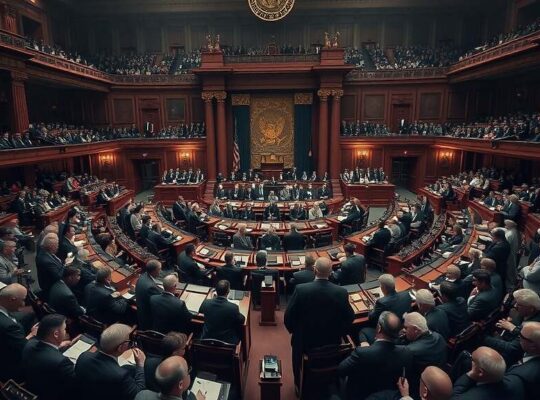
The European Broadcasting Union (EBU) confirmed Thursday that Israel will be permitted to participate in the Eurovision Song Contest in Vienna in 2026, a decision immediately triggering a wave of boycotts from several participating nations. The announcement follows a meeting of the EBU’s General Assembly in Geneva, where revised rules aimed at bolstering the contest’s perceived neutrality and transparency were adopted.
The decision to allow Israel’s continued participation comes amidst intense scrutiny surrounding the ongoing conflict in Gaza and escalating calls for the nation’s exclusion. Rumors of voting manipulation, though unsubstantiated, have further fueled the debate and placed significant pressure on the EBU. Notably, a direct vote on Israel’s exclusion, reportedly sought by several member broadcasters, did not occur during the assembly.
The fallout from the EBU’s decision has been swift and impactful. Broadcasters from the Netherlands, Spain, Ireland and Slovenia have already declared they will not send participants to the 2026 competition. Further deliberations are underway in Iceland and Belgium, raising the possibility of additional withdrawals. These boycotts represent a significant challenge to the contest’s viability and highlight the deep political divisions it has become entangled in.
In an attempt to mitigate future controversy, the EBU unveiled a series of regulatory changes slated to come into effect for the 2026 edition. These modifications include stricter guidelines on advertising campaigns, particularly those originating from governmental entities and intended to influence public opinion – a clear response to concerns about external political interference. The maximum number of votes allowed per payment method during the televised voting segment will also be reduced from 20 to 10. Furthermore, juries will return to the semi-final rounds, with mandates to include at least two jurors aged 18-25, potentially attempting to inject a broader range of perspectives into the judging process.
The EBU’s attempts at reform appear to have failed to quell the immediate backlash, raising fundamental questions about the contest’s ability to remain politically neutral and its vulnerability to geopolitical tensions. The boycotts and ongoing scrutiny underscore the precarious position the Eurovision Song Contest now finds itself in, balancing entertainment with increasingly complex political realities.