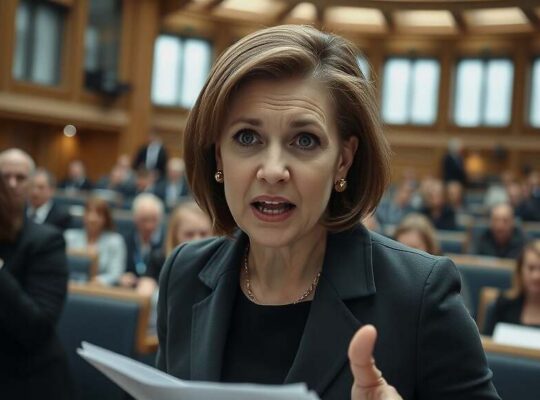
The parliamentary group leader of the Left faction in the Bundestag, Heidi Reichinnek, has defended her party’s planned abstention on the government’s pension package, emphasizing it is a matter of principle rather than a strategic maneuver to secure a majority for Chancellor Scholz. In statements given to RTL and ntv television stations, Reichinnek decisively rejected suggestions that the Left’s actions were designed to bolster the position of Christian Democratic Union (CDU) leader Friedrich Merz.
“We are not rescuing Mr. Merz” Reichinnek stated emphatically. “We are safeguarding the pensions of over 21 million people in this country”. She highlighted the escalating crisis facing pensioners, citing statistics that reveal nearly one in five retirees are either living in poverty or at serious risk of falling into it-a figure she attributes to the reduction in the pension level from 53% to 48%. Reichinnek asserted that the Left will steadfastly oppose any further erosion of the pension level.
Reichinnek dismissed expectations of any reciprocal concessions from the CDU in return for the Left’s abstention, clarifying that no discussions took place between the parties. “This isn’t about Mr. Merz, or Mr. Spahn, or the CDU as a whole. It’s about achieving results for the people” she stated. She further criticized the prevailing system, arguing for a comprehensive pension scheme where all working individuals contribute.
She downplayed the potential for a shift in the CDU’s existing non-cooperation resolution concerning the Left, noting the potential political fallout within the conservative party should the pension package pass primarily due to their abstention. “There will be repercussions. Heads will roll” she predicted.
Beyond pensions, Reichinnek indicated a willingness to potentially collaborate with both the CDU and SPD on the contentious issue of the debt brake, a key constraint on public spending. While advocating for its complete abolishment, she acknowledged that any reforms represent a positive step and pledged to carefully evaluate proposals from the relevant commission. She positioned the debate not as a generational conflict, but as a fundamental disagreement over resource distribution, a point on which, she believes, the CDU is hesitant to engage.