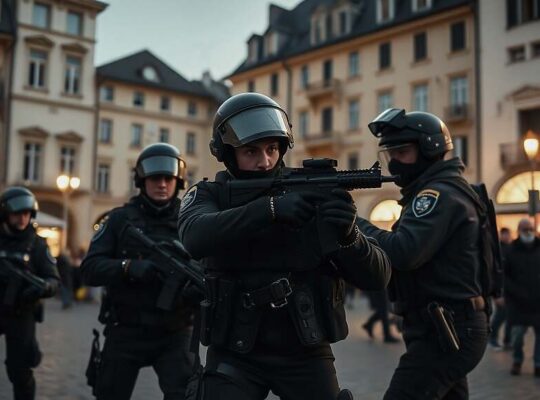
Nation-wide demonstrations erupted across Germany on Friday as lawmakers approved a controversial new defense service legislation, sparking immediate and widespread protests, particularly amongst young people. What began as opposition to the newly codified defense service quickly morphed into broader expressions of societal discontent, with scattered pro-Palestine demonstrations and critiques of left-wing political structures intertwining with the anti-military sentiment.
The Bundestag passed the legislation in the morning, initiating a phased approach intended to revitalize Germany’s defense capabilities. The core of the plan involves collecting data on the motivation and suitability of potential recruits through mandatory questionnaires beginning in 2026. All 18-year-old citizens, both male and female, will receive these questionnaires; however, completion will be compulsory for men. A significant element of the law retroactively mandates military service for men born on or after January 1, 2008. While the initial phase emphasizes voluntary participation and aims to make military service “attractive” the legal groundwork is being laid for a potential reinstatement of conscription.
The rapid protests reflect deep anxieties about the direction of German security policy and the potential for a return to mandatory military service, a concept largely absent from German public life for decades. The forced participation element for men, particularly those already in their teens and early twenties, has drawn condemnation as an intrusion on individual liberty.
Critics within parliament have also voiced concerns about the lack of transparency surrounding the criteria used to assess potential recruits, accusing the governing coalition of circumventing a more thorough public debate. Some argue that the legislation, while framed as a response to escalating geopolitical tensions, serves primarily to bolster the government’s security narrative while risking the alienation of a significant portion of the population.
The integration of pro-Palestine demonstrations and broader leftist critiques further suggests the protests represent more than just opposition to military service; they’re a manifestation of wider generational anxieties about the state, social justice and the government’s handling of complex international conflicts. The scale of school absences reported in several cities underlines the deep resonance of the issue among young people and raises questions regarding the government’s ability to effectively communicate the rationale behind the controversial new legislative measures.