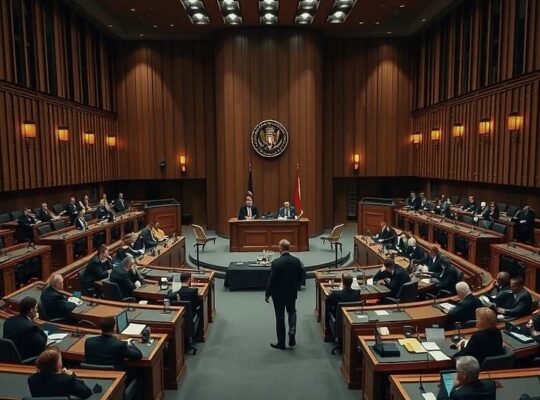
The tone within the German Bundestag has demonstrably deteriorated, according to Bundestag President Julia Klöckner, reflecting a deepening political fragmentation and challenging the institution’s capacity for constructive debate. In an interview with the Redaktionsnetzwerk Deutschland, Klöckner acknowledged a significant shift in parliamentary discourse, characterized by increasingly aggressive accusations and a palpable erosion of mutual respect.
She attributed this decline to a confluence of factors, citing the influence of digital media and, crucially, the composition of the current Bundestag. Klöckner highlighted a stark ideological polarization, noting that 10% of parliamentary seats are now occupied by representatives from the far-left, while a further 25% are held by figures from the political right. This increased presence of extremist factions appears to be fueling a heightened level of antagonism and a breakdown in established norms of engagement.
Data on parliamentary disruptions corroborates Klöckner’s concerns, revealing that the majority of calls for order are directed at members of the Alternative für Deutschland (AfD), with a smaller number aimed at representatives of the Left party. This disparity raises questions about the application of parliamentary procedure and potential bias in how disruptions are addressed.
While acknowledging the necessity of enforcing the recently revised Bundestag rules – intended to foster order and respect – Klöckner expressly rejected the notion of assuming a “super-nanny” role. She emphasized her responsibility is to apply the established bylaws impartially, regardless of political affiliation. Her statements underscore a commitment to consistent application of rules, arguing that they are not matters of subjective preference but rather foundational principles ensuring a fair and predictable legislative process. The ongoing challenge, however, lies in navigating a Bundestag increasingly defined by ideological division and pushing for a return to a more respectful and productive parliamentary environment.