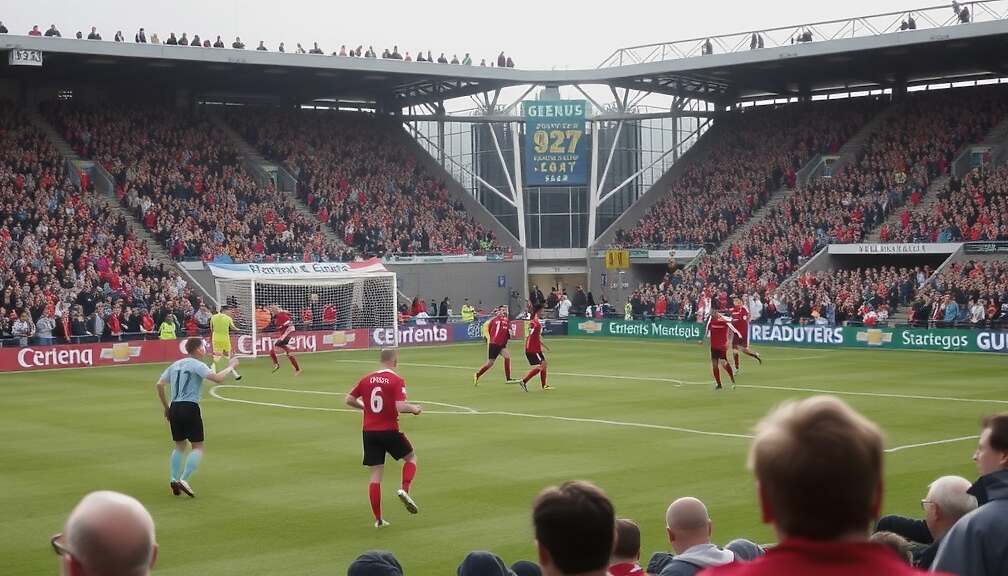
The unexpected ascent of Elversberg in the 2. Bundesliga has sent ripples through the German football landscape, raising questions about the established order and the impact of tactical adjustments at the lower tiers. Saturday’s dramatic 2-1 victory over previously second-placed Paderborn has seen Elversberg leapfrog their rivals, a result that underscores the unpredictability of the league and potentially signals a shift in power dynamics.
From the outset, Elversberg demonstrated relentless pressure, though Paderborn effectively managed possession for much of the first half. Younes Ebnoutalib’s goal, arriving somewhat fortuitously from a corner in the 32nd minute, initially gave Elversberg the advantage. Paderborn’s inability to capitalize on multiple opportunities before halftime, a lack of decisiveness evident in their attacking play, proved costly.
However, momentum swung emphatically in the second half. The introduction of Sven Michel, who remarkably equalized with his first touch of the ball in the 52nd minute, ignited a brief resurgence for the home side. This fleeting hope was brutally extinguished just five minutes later when Calvin Brackelmann received a direct red card – a pivotal moment that severely hampered Paderborn’s chances. Reduced to ten men, the team visibly faltered. While Elversberg had a goal disallowed after video review, Frederik Schmahl’s 76th-minute strike secured a deserved victory and a significant boost to their own promotion aspirations.
The context surrounding this upset cannot be ignored. Paderborn’s vulnerability, exposed by Elversberg’s aggressive style and compounded by the red card, has prompted speculation regarding the team’s managerial decisions and the depth of their squad. The performance also draws attention to the influence of tactical awareness and adaptability in a league increasingly scrutinized for its competitive balance.
Elsewhere on Saturday, Kaiserslautern secured a 3-1 victory over Dresden and Bochum edged out Bielefeld 1-0. The upcoming match between Darmstadt and Karlsruhe will undoubtedly be closely watched as the league table continues to evolve and the implications of Elversberg’s rise become clearer. This weekend’s results highlight the fragility of established positions in the 2. Bundesliga and underscore the increasingly competitive nature of German football beyond the Bundesliga’s elite.