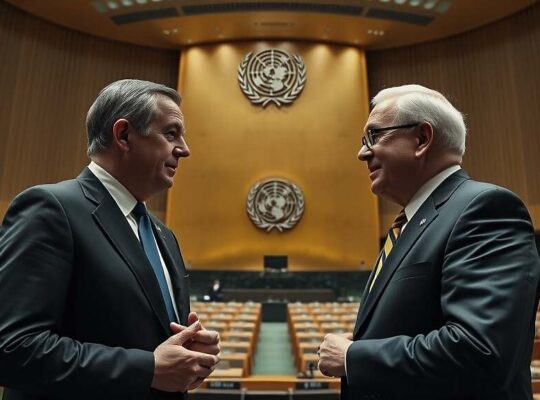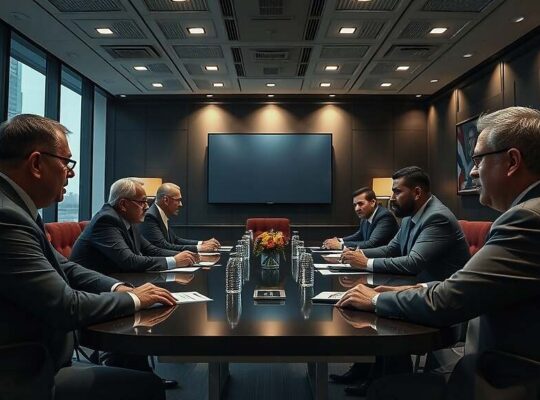
Ahead of a high-level meeting in London involving Friedrich Merz, Keir Starmer and Emmanuel Macron, with the participation of Ukrainian President Volodymyr Zelenskyy, a prominent voice within the German Social Democratic Party (SPD) is advocating for a significantly expanded European security role in Ukraine. SPD parliamentary group vice chair, Siemtje Möller, argues that Europe cannot simply remain a bystander in shaping the nation’s future.
Speaking to Politico, Möller stressed the necessity of a proactive European stance, stating that joint security guarantees demand active participation and ultimately, “military guarantees from all sides”. When directly asked about the potential for troop deployments, Möller acknowledged that the involvement of soldiers “certainly, at some point, yes” might become necessary, deferring the decision regarding German troop deployment to a parliamentary vote.
Möller’s remarks highlight a growing sentiment within European circles – a desire to maintain agency amidst shifting geopolitical landscapes and to avoid being solely dictated to by Washington and Moscow. She emphasizes that the EU must cultivate its own distinct policy trajectory, particularly concerning security guarantees, territorial integrity and the long-term prospects for Ukraine, framing these factors as inextricably linked to European and continental security.
Critically, Möller also pointed to a potential disconnect in priorities between Europe and the United States. She argued that while the US is primarily concerned with financial commitments and a swift resolution, Europe must clearly define its contributions – encompassing reconstruction efforts, humanitarian aid and, crucially, a sustained commitment to Ukraine’s long-term protection. This raises pointed questions about the distribution of responsibility and the potential for strategic divergence as the conflict evolves. The call underscores a need for Europe to articulate its own terms of engagement, rather than passively accepting direction from transatlantic partners.