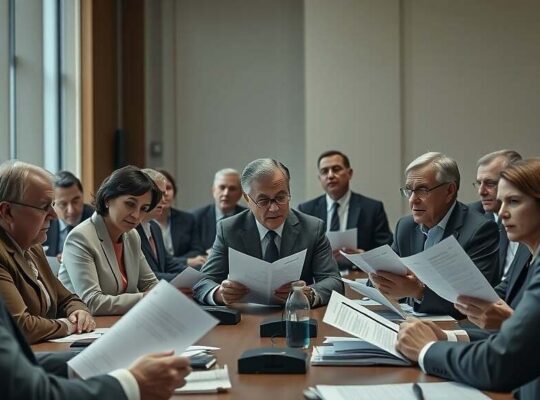
North Rhine-Westphalia’s government is facing a barrage of criticism following Premier Hendrik Wüst’s announcement that his cabinet will introduce a proposed Tariff Wage Security Act this Tuesday. The move, intended to bolster collective bargaining adherence, is being denounced by business leaders as premature and counterproductive, raising concerns about increased bureaucracy and potential economic strain.
Johannes Pöttering, Managing Director of the NRW Business Association, lambasted the legislation as “nothing more than bureaucratic symbol politics at an absolutely inopportune time”. He argues that mandating wage levels through state decree, effectively overshadowing existing collective agreements, ultimately undermines the principle of wage autonomy. The proposed law, designed to restrict public contracts to companies paying tariff wages, stems from a coalition agreement between the Christian Democratic Union (CDU) and the Green Party. While intended to satisfy persistent demands from labor unions, the move is drawing significant opposition from the business community.
While Pöttering acknowledged that the state government appears to be adopting a less drastic approach than the measures currently under discussion in Berlin, he cautioned that the legislation will nonetheless impose “additional burdens on both our companies and the public administration” particularly worrying given the current precarious economic climate.
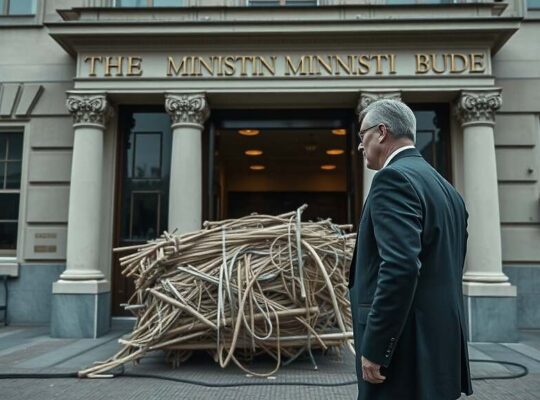
The introduction of this law places a heightened responsibility on the government to follow through on previously stated commitments to reduce red tape and offer relief to businesses. Pöttering emphasized the urgent need for tangible actions, not just promises, which genuinely provide relief, noting that numerous concrete proposals already exist to facilitate this process. The business association warns that failure to deliver on these commitments alongside this new regulatory burden risks further hindering economic recovery in North Rhine-Westphalia.