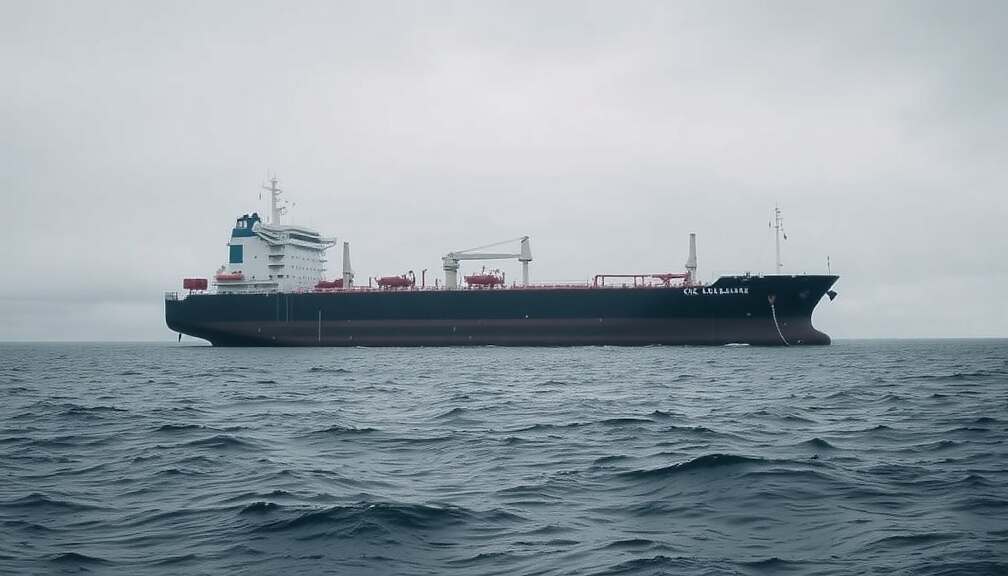
A protracted legal battle has stalled the German customs authority’s efforts to seize the oil tanker “Eventin” a vessel identified as part of Russia’s shadow fleet, raising critical questions about the application and limitations of EU sanctions against Russia. The Federal Finance Court (BFH) in Munich recently rejected the customs authority’s attempts to confiscate the ship and its cargo, citing legal uncertainties and the need to consider international maritime law.
The “Eventin” en route from Russia to India in January 2025, experienced mechanical failure and was towed into German waters, anchoring off Sassnitz on the island of Rügen. The cargo was already deemed a sanctioned good under the EU’s sanctions regime targeting Russia. While the tanker itself was subsequently added to the annex of the regulation listing vessels suspected of circumventing sanctions, customs officials initially secured and attempted to seize both the vessel and its contents.
The ship’s owners challenged the customs authority’s actions, leading the Regional Finance Court to suspend the measures as a form of provisional legal protection. This suspension has now been upheld by the BFH, which expressed concerns over the legal basis for the seizure. Central to the court’s decision is the ambiguity surrounding whether directing a disabled vessel into EU waters constitutes a violation of the sanctions regulation.
The BFH’s ruling highlights a complex legal landscape, forcing a deeper evaluation of the scope of the sanctions. Questions now arise regarding whether the regulation extends to actions occurring “outside” the EU, specifically the “removal” or “transfer out” of a vessel from European waters. The court emphasized the necessity of considering principles of international law, including the laws of sanctuary and the right of innocent passage, further complicating the situation.
Furthermore, the case raises the unresolved question of whether the EU sanctions framework explicitly prohibits a disabled vessel, alongside its sanctioned cargo, from resuming its journey following a maritime incident. This decision has far-reaching implications, potentially impacting the enforcement of sanctions against the shadow fleet and highlighting the challenges faced by EU authorities attempting to disrupt Russia’s ability to trade in circumvention of imposed restrictions. The ruling underscores the need for greater clarity within the sanctions regulations themselves and a more nuanced understanding of their application within the broader context of international maritime law.