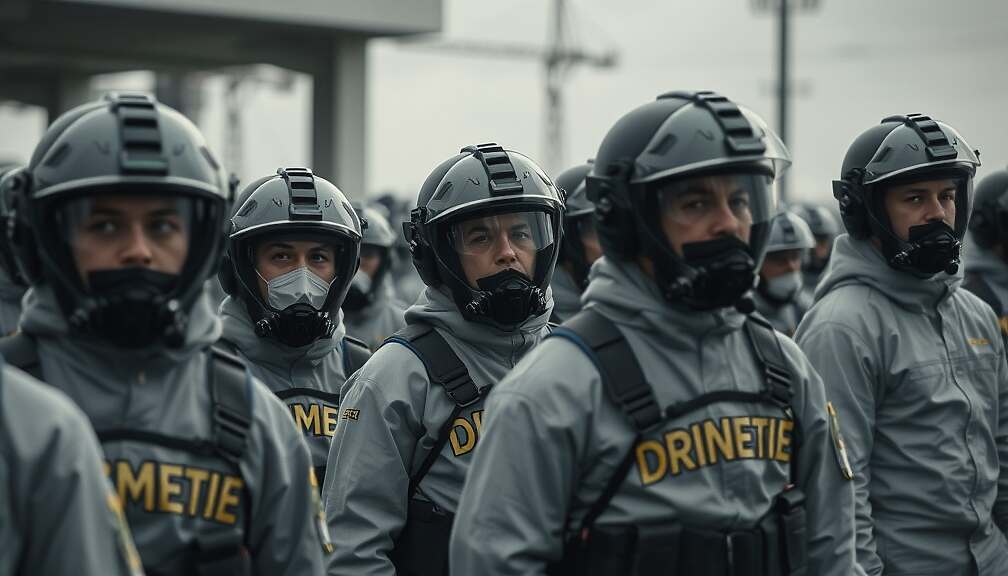
A significant shift in German defense policy is underway, signaling a markedly increased perception of risk and a substantial investment in civilian personnel protection. According to a confidential document prepared for the Bundestag’s budget committee and reported by “Der Spiegel”, Defense Minister Boris Pistorius is planning to equip all 80,000 civilian employees and officials of the Bundeswehr and his ministry with body armor and combat helmets.
The move, framed as necessary to enhance “operational readiness in an emergency” underscores a conscious realignment of the German military toward a more assertive stance on national and alliance defense. The progressive rollout of the protective equipment, the costs of which remain undisclosed, represents a departure from previous practices. Until now, only limited portions of the expansive civilian workforce – encompassing officials from the Defense Ministry, procurement agencies, technical services and thousands of technicians and administrative staff – have received such protection.
This initiative is part of a broader, multi-billion euro equipment package directly linked to ambitious plans to drastically expand the Bundeswehr. Minister Pistorius’s ministry recently requested an additional €21 billion to outfit not only new soldiers and conscripts, but also reservists. The request dwarfs previous estimates of roughly €10 billion allocated for soldier equipment.
The rapid growth of the Bundeswehr, expected to reach 265,000 active soldiers by 2035, coupled with the maintenance of a standing reserve force of approximately 200,000, necessitates a massive logistical undertaking dubbed internally as “Project Fiber” – signifying “Field Equipment Soldier / Expanded Reserve”. The urgency is compounded by the anticipated need to rapidly equip conscripts beginning next year, with officials citing “short standtimes” as a driver of significantly increased equipment needs. Furthermore, the drive for “high-quality equipment” for new recruits is contributing to escalating costs.
While officially presented as a necessary measure to bolster defense capabilities, the decision to equip civilian personnel raises questions about the evolving nature of perceived threats and the normalization of a heightened security posture within Germany. Critics are likely to scrutinize the cost implications and query whether such extensive protection should be extended to non-military staff, especially given the potential impact on public perception of security and preparedness. The decision reveals a clear escalation in Germany’s strategic outlook and signals a potential shift toward a more robust and potentially militarized civilian operational environment.