The coalition government’s recent decisions regarding infrastructure projects are drawing fierce criticism from within the Green Party, with former Environment Minister Steffi Lemke and Green Party’s spokesperson for transport policy, Swantje Michaelsen, accusing the Christian Democratic Union (CDU) and Social Democratic Party (SPD) of prioritizing unsustainable expansion over environmental protection and local community involvement.
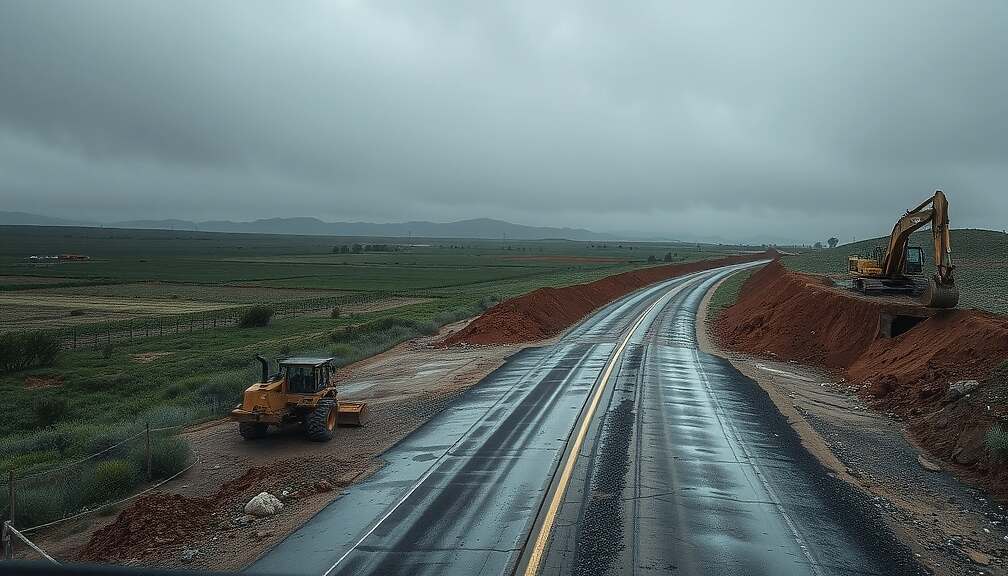
The core of the dispute centers on a government paper signaling a shift towards streamlining infrastructure project approvals, effectively granting a broad authorization for large-scale construction projects, often involving extensive concrete paving and expansion of roadways and parking facilities. Lemke and Michaelsen contend this approach represents a significant step backward for environmental and nature conservation efforts.
“Our water supply and food production are increasingly reliant on intact ecosystems, yet this appears entirely disregarded by the current federal government” the politicians declared. They characterized the SPD and CDU’s policies as creating a “blank check” for unrestrained development, directly undermining nature protection and disregarding the perspectives of local communities. The emphasis, they argue, prioritizes new construction at all costs while neglecting the crucial need to rehabilitate existing roads and bridges.
The decision to broadly designate infrastructure projects as being of “overriding public interest” is particularly alarming, according to the Green Party representatives. This designation, they warn, systematically marginalizes considerations of nature, climate and landscape. Furthermore, the proposed reduction of environmental impact assessments and the possibility of offsetting environmental damage through monetary payments has been likened to a “modern form of indulgences” – a system that allows for the purchase of environmental waivers at the expense of fundamental life support systems.
Rejecting the narrative that speed and environmental protection are mutually exclusive, Lemke and Michaelsen emphasized the possibility of integrating ecological considerations into the initial planning phases. They argue that true sustainable development requires proactive environmental integration, rather than reactive and often inadequate compensatory measures. The current trajectory, they suggest, risks irreversible damage to Germany’s natural resources and a fractured relationship with communities impacted by unsustainable development.