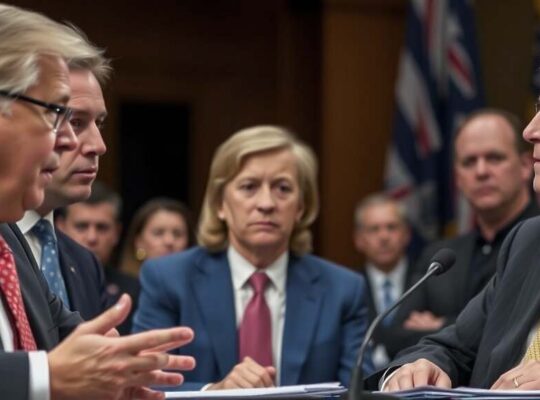
The internal debate within the Social Democratic Party (SPD) is intensifying as pressure mounts to solidify plans for the replacement of the existing “Bürgergeld” (citizen’s allowance) with a newly structured basic security system. Philipp Türmer, the chairman of the Jusos – the SPD’s youth wing – has issued a direct challenge to his party’s leadership, urging them to firmly reject demands for stricter sanctions originating from the Christian Democratic Union (CDU) and Christian Social Union (CSU).
Türmer’s intervention underscores a growing rift within the governing coalition. While ostensibly agreeing on a transition from “Bürgergeld” to a revamped basic security framework, substantial disagreements persist regarding the scope and severity of potential penalties for recipients. A draft proposal brought forward by Labour Minister Bärbel Bas, an SPD member, failed to reach the cabinet this week directly due to lingering reservations emanating from the CDU/CSU factions. These concerns primarily revolve around the precise conditions under which stricter sanctions, potentially including the complete suspension of benefits, could be implemented.
“We must stand firm against the Union” Türmer stated to the Funke-Mediengruppe newspapers, signaling a clear intention to push back against perceived overreach from the conservative bloc. He emphasized his unwavering stance that any basic security measures must adhere to constitutional principles and avoid conditions that could be deemed inhumane. He cautioned that any compromise that further erodes the core tenets of basic security would be unacceptable to many SPD parliamentarians.
The criticism extended to the CDU/CSU themselves, with Türmer bluntly characterizing them as a “dysfunctional group” highlighting the challenges of maintaining a cohesive coalition government. The clash signals a potential showdown in the Bundestag, with the Jusos seemingly prepared to act as champions of a more socially responsible approach to basic security reform and challenging the conservative push for increasingly harsh measures. This internal struggle within the SPD demonstrates the complexities of coalition politics and the potential for significant policy divergence despite apparent consensus.