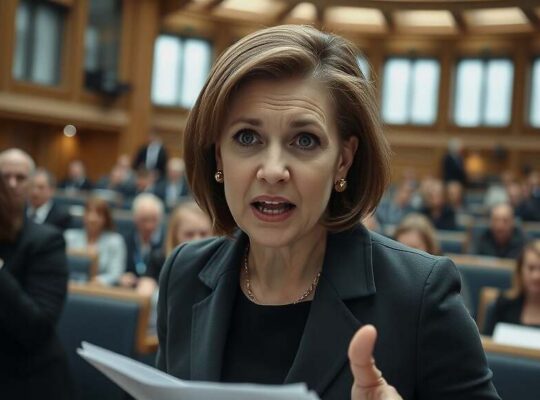
The German Green Party faces a critical juncture and former Agriculture Minister and parliamentary group leader Renate Künast is urging the party to decisively move beyond any lingering hopes of a return for former co-leader and Vice-Chancellor Robert Habeck. In an interview with “Der Stern”, Künast cautioned against the “nostalgia” surrounding Habeck, arguing it hinders the party’s ability to forge a new, independent path.
Künast’s remarks suggest a deeper unease within the Green Party – a sentiment reminiscent of the period following Joschka Fischer’s departure, when the party grappled with its identity in opposition. She implicitly criticized the tendency to rely on individual figures for revival, emphasizing that both Fischer and Habeck were products of collective effort and that the party’s strength lies in its shared commitment.
The current political climate, post-coalition government, demands a robust reassessment of the Green Party’s strategies and messaging. Künast’s comments carry a pointed message: clinging to the hope of a return to familiar leadership risks stagnation and an inability to address the complex challenges ahead.
Drawing a direct parallel to the party’s experience in 2005, after their initial foray into government, Künast underscored the importance of rejecting the temptation to revert to pre-governmental stances. “We must not allow the pendulum to swing back to a position as if we never shouldered governmental responsibility” she stated, reaffirming the party’s continued ambition for a return to power.
This explicit rejection of idealized past leadership suggests a calculated effort to solidify a pragmatic, forward-looking identity – one built not on individual charisma, but on a belief in the party’s own capabilities and policy proposals. While pragmatic and demonstrating a clear direction, the emphasis on collective effort also hints at a need to address potential disquiet amongst members who may privately hold different views on the party’s current trajectory.