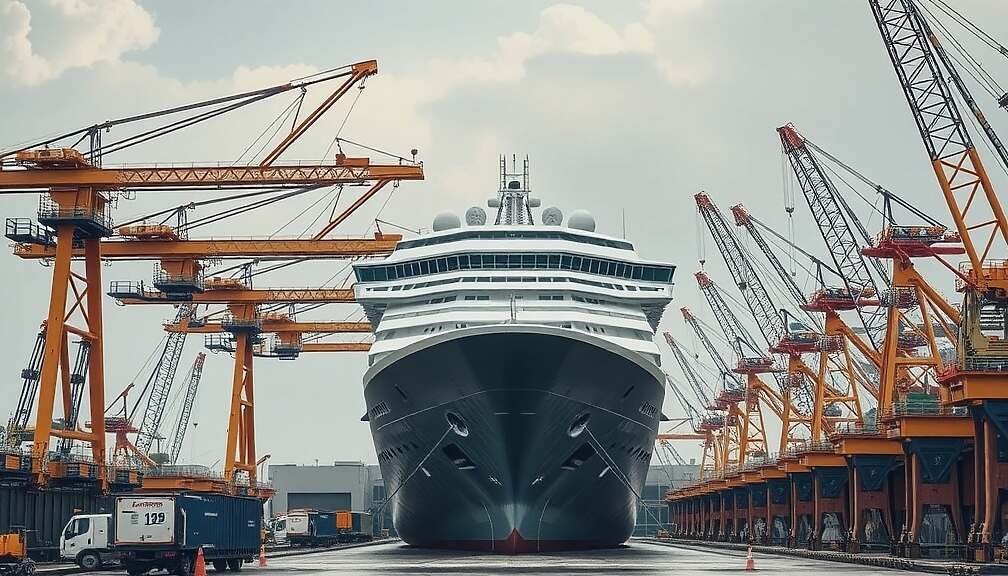
The Meyer Werft shipyard, a cornerstone of German engineering and shipbuilding, has secured a significant boost to its future viability with a provisional order from MSC Cruises. A “Letter of Intent” was signed at the Federal Ministry for Economic Affairs and Climate Action on Monday, outlining a potential build of four to six cruise ships valued up to €10 billion. The agreement promises to keep the Papenburg shipyard operational until 2035.
The deal represents a critical juncture for Meyer Werft, which has faced considerable financial strain stemming from the COVID-19 pandemic and the ongoing war in Ukraine. Late last year, the German federal government and the state of Lower Saxony intervened to stabilize the company, assuming a majority stake and guaranteeing a credit framework of €2.6 billion. This intervention highlights the strategic importance of the shipyard to the German economy and the government’s willingness to provide substantial support for critical industries.
Federal Minister for Economic Affairs and Climate Action, Katherina Reiche (CDU), lauded the agreement as a testament to decisive leadership and a display of international confidence in German innovation. However, the deal also raises questions regarding the long-term sustainability of such state intervention in private enterprise. While the injection of capital has undoubtedly averted immediate crisis, critics argue that relying on substantial government backing creates a dependency that may stifle the company’s ability to adapt to future market shifts and implement necessary internal reforms.
Furthermore, the sheer scale of the potential investment-up to €10 billion-is drawing scrutiny regarding the potential for cost overruns and the risk of concentrating economic power within a single conglomerate. The agreement also raises ethical considerations surrounding the cruise industry’s environmental impact and labor practices. While the Meyer Werft promises innovation, environmental sustainability and responsibility within shipbuilding remains a crucial area for continued focus, especially given the demanding ecological standards now expected of the cruise sector. The deal’s impact will ultimately depend on Meyer Werft’s ability to leverage this lifeline to transition to a more resilient and ecologically conscious model.