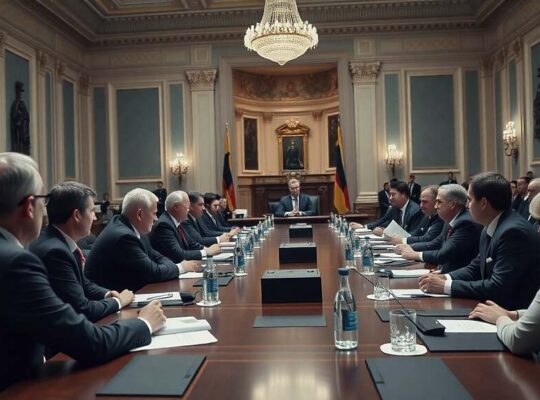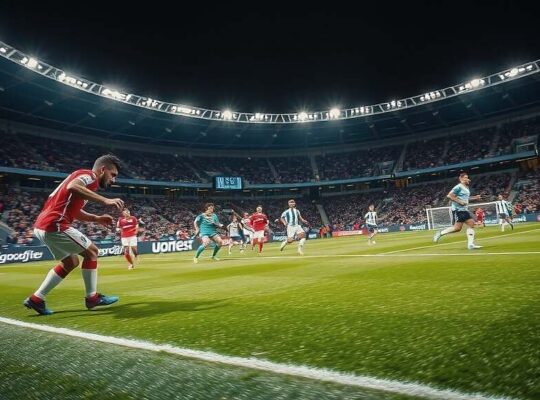
The VfL Wolfsburg board has announced the extension of Daniel Bauer’s contract as head coach, binding him to the club until June 2027, a decision that signals a potential shift in the club’s long-term strategy despite lingering questions about its direction. Bauer, who assumed leadership in November following the departure of Paul Simonis, has overseen a period of relative stability, securing seven points from their last four matches-a marked improvement after a turbulent initial phase.
While club officials, including Sporting Director Peter Christiansen, have lauded Bauer’s ability to “stabilize and develop” the team, fostering a stronger unit and injecting “new life” into the squad, the rapid contract extension raises eyebrows. The timing, coming after a period of restructuring within the sporting leadership, suggests a deliberate move to solidify a coaching presence, perhaps preempting further instability.
Sporting Director Pirmin Schwegler’s acknowledgement of the team’s on-field performance offers a superficially positive assessment. However, critics argue that Bauer’s appointment was primarily a reactive measure, designed to halt a downward spiral rather than a proactive choice based on a clear, ambitious vision for Wolfsburg’s future. The demonstrable improvement, while welcome, should not obscure the underlying questions about the club’s broader ambition in a fiercely competitive Bundesliga landscape.
Bauer himself expressed gratitude for the continued confidence, highlighting the team’s recent work ethic. This sentiment underscores a pragmatic approach, focusing on consistent performance rather than revolutionary changes. The scheduled commencement of his Pro-License course with the German Football Association (DFB) in January 2026 further reinforces this image of a coach focused on incremental, professional development, rather than a bold innovator.
The extension, rather than signifying a triumphant consolidation, arguably presents a challenge for Wolfsburg: to leverage this stability to cultivate a truly compelling and competitive identity, or risk stagnation under a coach whose strengths lie in crisis management rather than transformative leadership. The club’s future success hinges on the ability to move beyond this reactive posture and articulate a clearer, more ambitious plan for the years to come.