German Agricultural Landscape Reveals Shifting Priorities Amidst Policy Uncertainty
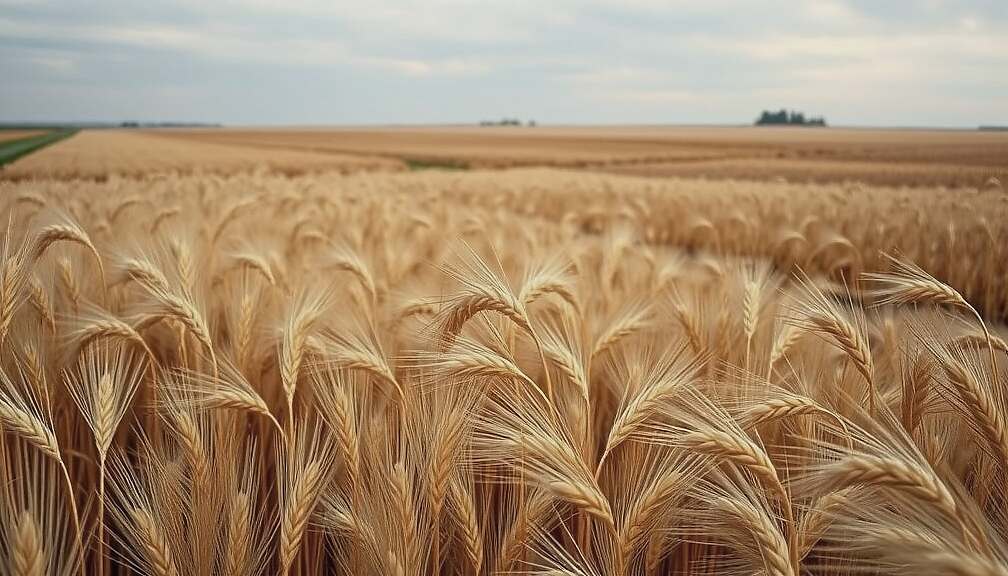
Data released Monday by the Federal Statistical Office (Destatis) paints a complex picture of Germany’s agricultural intentions for the 2026 harvest, revealing a largely stable winter grain acreage while signaling a noticeable shift towards rapeseed cultivation. Across 5.0 million hectares, farmers have sown winter wheat, winter barley, rye, winter triticale and triticale – a figure virtually identical to planting levels in 2025, an increase of just 1.3% (63,800 hectares).
The dominance of winter wheat remains unchallenged, accounting for 2.9 million hectares, a mere uptick of 0.3% (8,900 hectares) compared to the previous year. This relative stability underscores the continued reliance on this staple crop within the German agricultural sector, however, it also raises questions about the potential for diversification and adaptation to evolving climate challenges.
A more striking development is the substantial increase in winter barley acreage, surging by 4.9% (58,700 hectares) to reach 1.3 million hectares. While factors such as improved market conditions for barley may be contributing, this expansion could also reflect a response to government policies advocating for more varied crop rotations, potentially mitigating soil degradation and disease risks. The extent to which this represents a genuinely long-term trend, or a temporary market-driven fluctuation, remains to be seen.
Rye and triticale acreage remained largely unchanged, with rye showing a slight decline (-2.0% or -10,500 hectares) and triticale experiencing a minor increase (+2.3% or +6,700 hectares). These figures indicate a degree of stability within these less-dominant grain categories, though the modest contraction in rye acreage warrants observation as it could reflect changing consumer demands or an increased adoption of alternative crop choices.
The most significant departure from previous planting patterns is the noticeable expansion in winter rapeseed cultivation. Farmers have dedicated 1.1 million hectares to rapeseed, representing a significant 4.9% (53,500 hectares) increase. This surge is most prominent in key agricultural regions-Bavaria (+14.7%), Lower Saxony (+14.5%) and North Rhine-Westphalia (+14.6%)-suggesting a geographically concentrated shift. The rising popularity of rapeseed, often touted for its oilseed production and potential for biofuels, invites scrutiny regarding its environmental impact, particularly concerning biodiversity and the heavy reliance on pesticides commonly associated with its cultivation.
The data emerges at a time of heightened political debate surrounding agricultural subsidies, environmental regulations and the European Union’s Common Agricultural Policy (CAP). While the stabilization of winter grain acreage suggests a degree of predictability, the diversification into rapeseed and the increased barley acreage potentially reflect a response to policy signals and market pressures, albeit with uncertain long-term consequences. The upcoming harvest will be closely monitored to determine whether these shifts demonstrate a genuine realignment within German agriculture, or merely represent temporary adjustments to fluctuating conditions. Further analysis is required to determine the sustainability and long-term impact of these evolving agricultural practices.