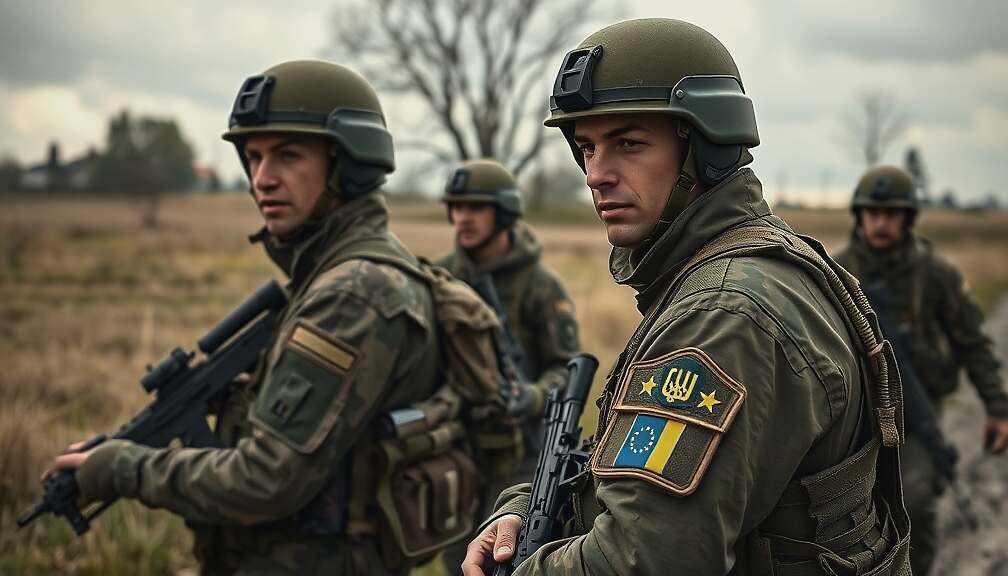
The European People’s Party (EPP) leader, Manfred Weber, has ignited a debate within the European Union, advocating for the deployment of German soldiers under a unified European flag to guarantee the stability of any future peace settlement in Ukraine. Weber’s assertion, published across the Funke-Mediengruppe newspapers, directly challenges existing approaches to European security and highlights a growing disenchantment with reliance on the United States.
Weber explicitly stated that a shared European military force, prominently featuring the European flag, is essential for ensuring Ukraine’s safety alongside its allies. He pointedly questioned the feasibility of relying solely on American troops for post-conflict security, particularly given the uncertainties surrounding future US foreign policy. “We cannot seriously expect Trump to secure a peace solution alone with American GIs” he remarked, a subtle but pointed critique of potential shifts in transatlantic alignment.
The proposal, while ambitious, raises complex questions about national sovereignty and the readiness of member states to commit to a unified military structure. While Weber acknowledges that Germany, Europe’s largest economy and potentially crucial contributor to such a force, “cannot remain outside” such an initiative, the political hurdles remain substantial.
Weber’s optimism regarding European security responsibility contrasts with a pessimistic assessment of Russia’s intentions. He voiced strong skepticism about a swift cessation of hostilities, accusing President Putin of manipulating divisions within the West to his advantage. “Putin is leading us by the nose” Weber charged, criticizing his continued posture as indicative of a lack of genuine commitment to peace. He argued that a unified, strong European voice is the only way to deter Putin from achieving his strategic goals.
The statement also provided praise for the efforts of German Chancellor Friedrich Merz, portraying him as a central figure in European peace initiatives, a signal of the internal CDU and CSU alignment on strategic priorities. However, Weber’s call for increased European military engagement necessitates a broader discussion about the EU’s defense capabilities and its willingness to assume a more active role in global security – a conversation fraught with political risks and potentially transformative consequences for the Union’s future. The proposal underscores the ongoing tension between the desire for a stronger, more unified Europe and the ingrained reluctance to fully cede national control over military matters.