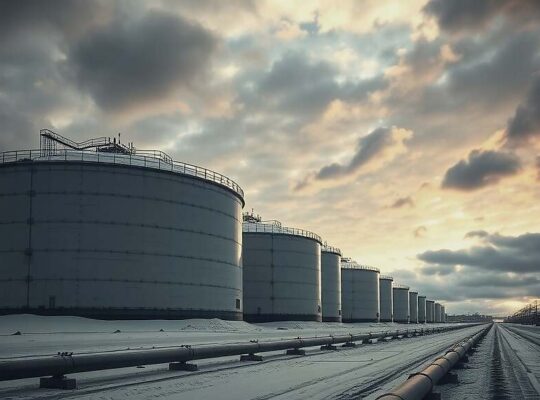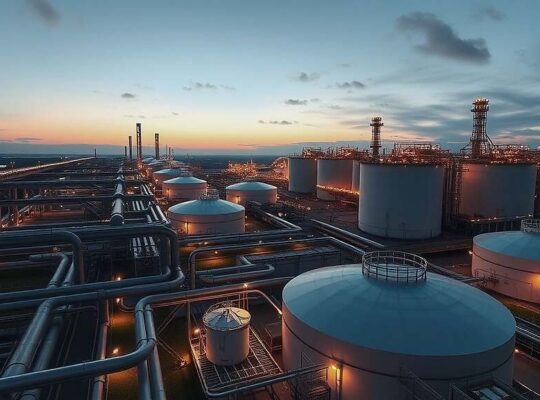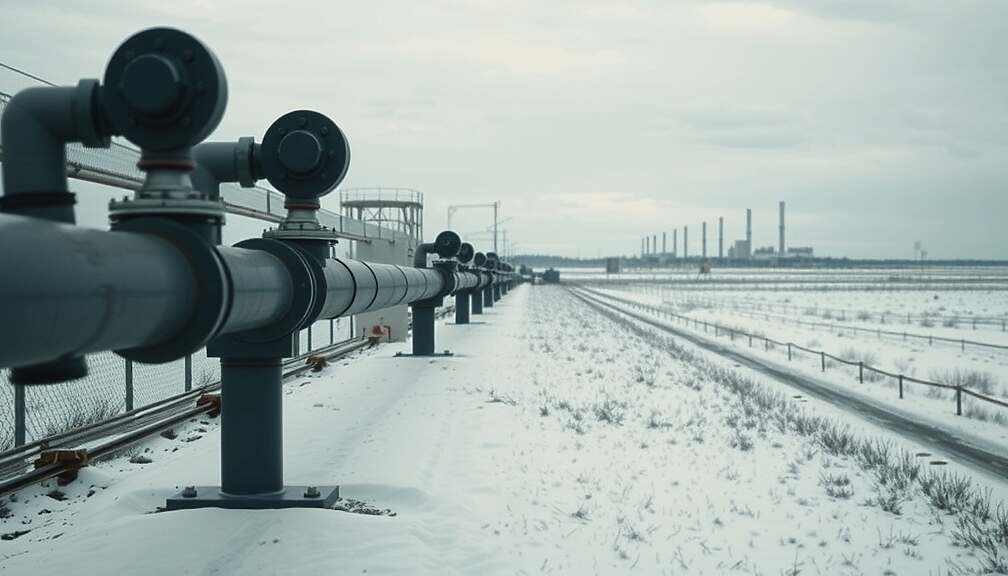
Despite lingering concerns about winter chill and moderately filled gas storage facilities, the President of the German Federal Network Agency (Bundesnetzagentur), Klaus Müller, has asserted that Germany’s gas supply is secure this winter. In an interview with the “Rheinische Post” Müller sharply contrasted the current situation with the crisis experienced in the immediate aftermath of Russia’s invasion of Ukraine. He attributed this perceived stability to a diversified supply strategy, emphasizing the critical role of liquefied natural gas (LNG) terminals, pipeline gas imports from Norway and deliveries via Belgium, the Netherlands and France. He noted that over a third of the heating season has already passed.
While acknowledging that German gas storage facilities are currently only 60% full, with Europe’s largest storage facility in Rehden as low as 28%, Müller downplayed the significance of this deficit. He framed the Rehden facility’s lower fill level as a consequence of its inland location and reduced geographical strategic importance, drawing a distinction from its role in previous energy crises.
Müller expressed confidence that the planned gas embargo against Russia, slated to take effect in 2027, will not jeopardize the country’s energy security. He highlighted Germany’s evolving role as a transit nation and underscored the strategic value of the four LNG terminals constructed on the North and Baltic Seas – initially intended to bolster supply security and demonstrate solidarity with neighboring countries. “No living room shall be cold, no industrial plant unable to produce” he stated, echoing government policy objectives.
The current downward trend in gas prices, according to Müller, is linked to the ongoing economic slowdown, as reduced industrial activity translates to lower gas demand. However, he warned that this is likely to be a temporary phenomenon. Looking ahead, Müller predicts rising gas prices, citing increasing carbon dioxide emissions charges and escalating grid fees as key drivers. He pointed to Germany’s commitment to climate neutrality by 2045 as a foundational factor, suggesting that the eventual decommissioning of gas networks will lead to higher costs for remaining consumers. The distribution of fixed network costs across a shrinking customer base, he explained, will inevitably push prices upward. The accelerating trend of municipalities aiming for gas phase-out dates – ranging from 2035 to 2045 – is further accelerating this shift. Consumers are already responding, actively transitioning to alternatives such as heat pumps and district heating systems, a development Müller described as an inevitability given the evolving economic landscape and the political imperative to decarbonize.