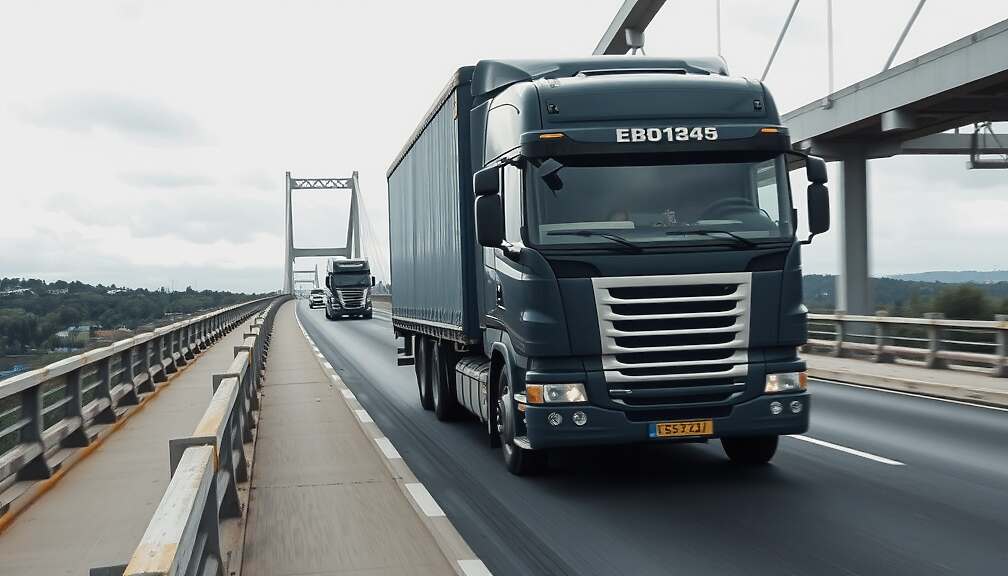
North Rhine-Westphalia’s Transport Minister Oliver Krischer, of the Green Party, is escalating concerns over the persistent violation of weight restrictions on structurally vulnerable bridges, advocating for drastically increased fines for truckers who disregard the bans. Speaking to the “Rheinische Post”, Krischer highlighted findings from strategically placed weighing stations demonstrating a widespread disregard for regulations, emphasizing the necessity for decisive action.
“The data clearly indicates that too many trucks are illegally crossing bridges designated as overloaded” Krischer stated, aligning with Interior Minister sentiments that current penalties are inadequate. The current system, he argued, imposes fines as low as €100 for exceeding weight limits – a sum deemed shockingly lenient given the potential for catastrophic structural damage a 40-ton vehicle can inflict on a compromised bridge and in contrast to the cost and time savings enjoyed by transport companies taking these shortcuts. Krischer insists that the fines must be significantly raised to effectively deter these violations, placing the onus on the federal government to enact the necessary legislative changes.
Beyond the immediate issue of enforcement, Krischer has issued a stark warning regarding the broader national infrastructure deficit. He pointedly criticized the federal government’s shortfall in bridge renovation efforts, noting that the current rate of approximately 170 bridges repaired annually falls far short of the planned 400. While acknowledging North Rhine-Westphalia is making progress – highlighting the ongoing renovation of 43 bridges, a further 45 in progress and 42 planned for 2026 – he stressed that this progress is not a cause for complacency, but rather a race against the potential for another devastating bridge closure. “We’re systematically tackling the backlog, but we need to ensure we don’t face a renewed crisis” Krischer cautioned.
Adding further fuel to the criticism, Krischer voiced profound disappointment over the allocation of the recently established €500 billion infrastructure special fund. He highlighted the glaring omission of inland waterways, including canals and locks, from the fund’s scope, categorizing it as “absurd”. This neglect, he warned, poses a serious threat to the shipping industry and risks forcing the closure of critical waterways within North Rhine-Westphalia. “We have ancient locks in NRW that are already operating at half capacity” Krischer explained, underscoring the potential for widespread disruption. The minister’s intervention represents a potent critique of both federal infrastructure policy and its potential consequences for regional stability and economic activity.