The long-held strategy of liberal democratic parties to isolate and marginalize the Alternative for Germany (AfD) through a “firewall” has demonstrably failed, according to prominent author and lawyer Juli Zeh. In an interview with the “Wochentaz” Zeh argued that this approach, pursued over the last decade, has yielded no tangible results, evidenced by the continued growth in AfD support.
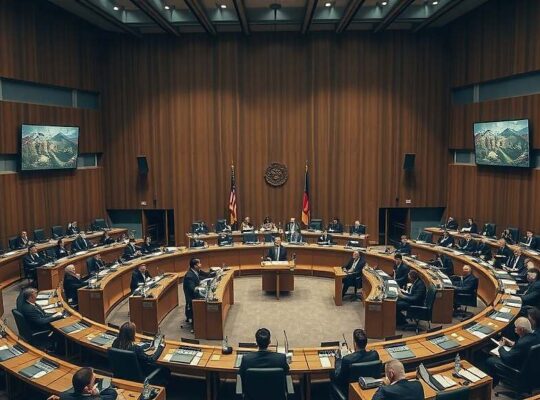
Zeh highlighted the increasingly precarious political landscape, particularly in Brandenburg, where the AfD’s status as a blocking minority now renders the election of constitutional judges practically impossible, raising fundamental questions about the functionality of democratic institutions. “Are we simply going to stop electing constitutional judges?” she questioned, underscoring the severity of the situation.
Regarding potential legal action to ban the AfD, Zeh expressed skepticism, warning that such a move could ironically be exploited by the party itself. She posited that a strategic AfD functionary would likely list a ban attempt on their wish list for 2026, indicating their potential to capitalize on the ensuing controversy and garner sympathy.
Beyond the immediate political maneuvers, Zeh cautioned against widespread alarmism, arguing that pronouncements of impending doom – whether in political discourse or journalistic reporting – can inadvertently bolster the success of right-wing populists by diverting attention from substantive engagement with democratic principles and liberal values. She criticizes the tendency to prioritize sensational headlines over nuanced analysis, potentially fostering a climate of fear and disengagement.
Living in Brandenburg, a region with a significant AfD voter base, Zeh attributes the party’s success to a broader societal dissatisfaction and a profound lack of trust in traditional political establishments. She contends that this erosion of trust stems from a perceived failure to address fundamental social needs – education, transportation, healthcare, elder care, affordable housing. Zeh firmly believes that the most effective countermeasure to right-wing populism lies not in reactive measures like potential bans, but in proactive, targeted policy addressing these core issues and rebuilding public faith in the ability of government to deliver tangible improvements. The path forward, she insists, requires policies that directly tackle the concerns of citizens and dissolve the foundations of distrust driving support for populist movements.