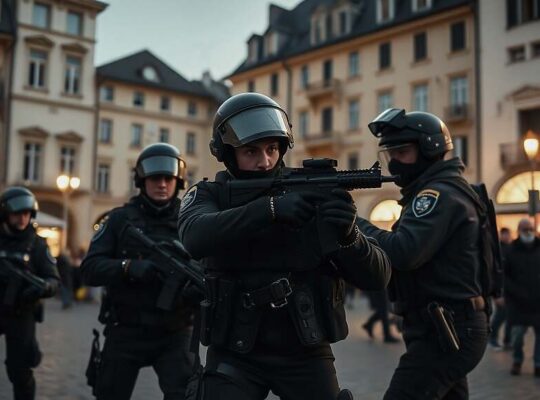
The German Army faces a crisis of leadership and values following a wave of investigations triggered by allegations of misconduct within the Airborne Infantry Regiment 26, based in Zweibrücken. Generaloberst Christian Freuding, the Army Inspector, announced consequences in response to the accusations, acknowledging that investigations have revealed “serious offenses, including criminal acts” beyond the initial reports.
The scandal, first brought to light by soldiers’ complaints submitted to the Military Ombudsman of the German Bundestag in June 2023, encompasses a deeply troubling array of issues. Military spokespersons confirm extensive investigations into 55 individuals, highlighting a systemic breakdown in unit culture. Nineteen soldiers are facing dismissal proceedings, with three already having been released and 16 cases have been forwarded to the public prosecutor’s office, suggesting potential criminal charges. A further 16 soldiers have been subjected to disciplinary measures and 20 are under preliminary investigation by the Military Disciplinary Prosecutor’s Office. Investigations remain ongoing, indicating the potential for further revelations.
The allegations, as detailed by soldiers to the Military Ombudsman, include instances of sexualized misconduct, extremist behavior and violations of drug laws. The revelations have prompted Freuding to stress the need for a “re-establishment of values” and a leadership style defined by “trust, responsibility and exemplary conduct”. He insists that such a culture is “a fundamental prerequisite for a high level of combat readiness” within the airborne forces.
Critics are questioning the depth and speed of the response from Army leadership. The sheer volume of individuals implicated and the range of offenses suggest a potentially widespread and long-standing problem, raising concerns about the efficacy of previous oversight mechanisms. While Freuding’s action plan for the airborne troops signals a commitment to reform, analysts argue that a broader examination of military culture and leadership training is necessary to prevent similar scandals from arising in other units. The current situation has undoubtedly damaged the reputation of the German armed forces and intensified scrutiny of internal processes and accountability systems. The full extent of the damage, both to morale and to operational effectiveness, remains to be seen.