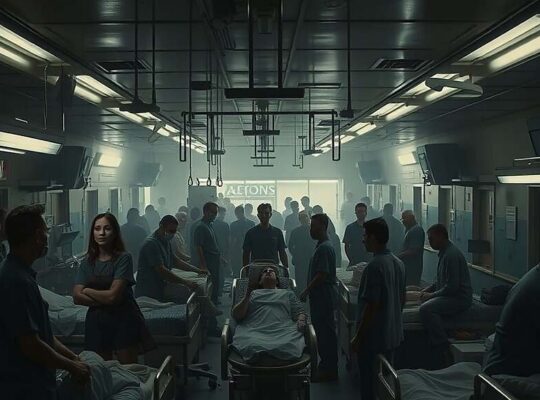
The German Society for Emergency Medicine (DGINA) is questioning the effectiveness of Justice Minister Stefanie Hubig’s proposed initiative to increase penalties for attacks on medical personnel, arguing that harsher sentencing alone will not guarantee the safety of healthcare workers. Harald Dormann, DGINA’s Vice President, expressed skepticism in an interview with Funke-Mediengruppe, pointing out that current legislation already allows for prison sentences of up to five years, a deterrent that has demonstrably failed to prevent incidents.
Dormann highlighted the disproportionate prevalence of violence in clinics and emergency rooms, a reality prompting hospitals to implement measures like de-escalation training and security personnel. However, he underscored a critical flaw in the response: these measures are largely unfunded, placing a further strain on already stretched hospital budgets. “Hospitals are absorbing these costs from limited resources” he stated.
Instead of focusing solely on punitive measures, Dormann advocates for a more nuanced and resource-driven approach. He emphasized the capability of medical professionals to effectively manage patients experiencing mental health crises, addiction, or intoxication, but stressed that this requires adequate staffing and targeted training – elements currently lacking within the German healthcare system. He criticized the ongoing debate surrounding increased penalties as “one-sided” suggesting a misdirection of focus away from the systemic issues contributing to the problem. The critique implicitly questions whether the government’s proposed solution addresses the root causes of the violence, or simply acts as a symbolic gesture while neglecting the practical needs of frontline medical staff.