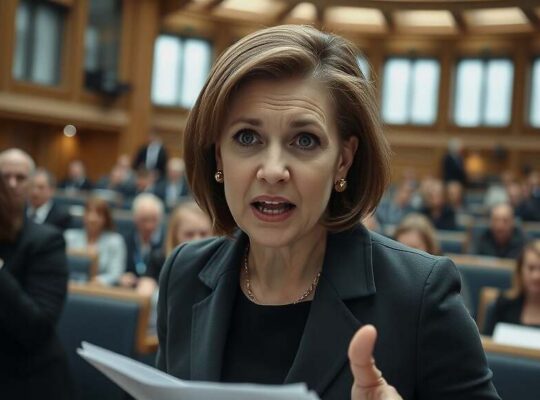
The possibility of German military involvement in securing a potential peace agreement in Ukraine, as part of a multinational force, remains open within the Social Democratic Party (SPD), signaling a degree of internal debate and cautious maneuvering. Adis Ahmetovic, the SPD’s parliamentary group’s spokesperson for foreign policy, acknowledged in an interview with “Der Spiegel” that the party has not definitively endorsed or rejected such participation, characterizing the discussion as currently “an auditorium debate.
Ahmetovic’s comments reflect the complex political landscape surrounding the proposal. He emphasized the practical obstacles, notably the absence of a ceasefire and continuous Russian bombardment of Ukrainian territory, which preclude meaningful peace negotiations. While asserting Germany’s commitment to fulfilling its responsibilities within the EU and NATO, he stressed the need for “robust security guarantees” for Ukraine and a strengthened European security architecture.
The SPD politician underscored the urgency of prioritizing diplomatic efforts at the start of the new year, focusing on bringing an end to the conflict. He highlighted the necessity of continued European unity and maintaining the engagement of the United States, even amidst recent strains in transatlantic relations. Ahmetovic pointedly argued that the current situation renders it impossible to compel Russia, under Putin’s leadership, into genuine negotiations without US involvement.
Recent reporting by “Welt”, citing diplomatic sources in Brussels, suggested plans for an international peacekeeping force comprising 10,000 to 15,000 troops from European nations. This follows earlier discussions by French President Emmanuel Macron, who alluded to a peace force involving 26 participating states during a meeting of the “Coalition of the Willing.
Conservative voices within the German government have adopted a more ambiguous stance. Chancellor Friedrich Merz, in a recent ZDF interview, deftly avoided a direct response when questioned aboutpotential German participation, highlighting the international scope of the “Coalition of the Willing” which includes nations beyond Europe like Canada and Australia. This deliberate vagueness raises questions about the solidity of commitment within the governing coalition and the extent to which Germany is prepared to shoulder the potential risks and obligations associated with deploying troops in a volatile post-conflict environment. The ongoing internal debate within the SPD, alongside the cautious responses from conservative circles, underscore the delicate political calculations shaping Germany’s role in the evolving Ukrainian crisis.