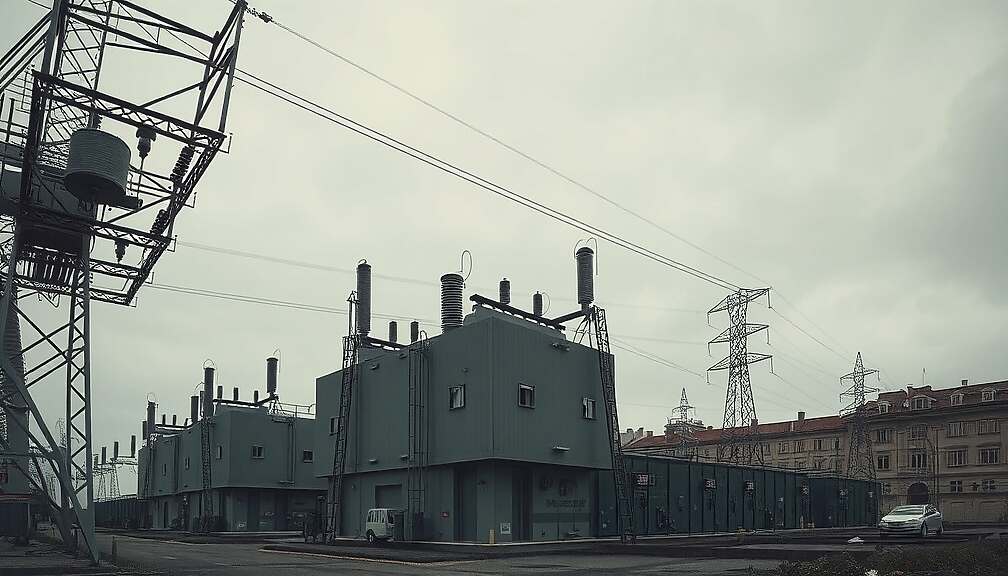
The recent, widespread power outage in Berlin, attributed to sabotage, has ignited a fierce debate within Germany about the security of its critical infrastructure and the government’s preparedness for escalating threats. The BVMW, the German Association of Medium-Sized Businesses, is now calling for the creation of dedicated “Crisis Special Commission” (Krisen-SEK) teams, specifically designed to respond to and mitigate the impact of attacks on vital infrastructure.
“We can no longer rely on hope; we need specialized response forces – a Crisis-SEK that is immediately deployable in an emergency to minimize the consequences of serious attacks on our businesses” stated BVMW President Christoph Ahlhaus. The disruption has already been estimated to have cost the German economy a sum in the double-digit millions, stemming from business closures, disrupted supply chains and the widespread inability of workers to attend their jobs due to school and daycare closures.
The CDU (Christian Democratic Union) Economic Council has expressed profound concern, warning that the incident exposes critical vulnerabilities. Wolfgang Steiger, the council’s General Secretary, emphasized the terrifying prospect of a coordinated, large-scale assault, highlighting how a relatively small act of sabotage could inflict such devastating damage. “It’s frightening to contemplate what would happen in the event of a concerted attack” he told Funke-Zeitungen. “We are painfully aware of how vulnerable our economic and daily lives have become.
The CDU’s call extends beyond immediate response, urgently demanding that the federal government proactively identify and address existing resilience gaps within Germany’s energy infrastructure. A specific and pressing concern is the burgeoning threat posed by drone surveillance, with officials suggesting reconnaissance photos obtained through these overflights could be exploited for future attack planning.
Steiger underscored that the nation’s electrical grid is already under siege from hybrid and cyberattacks, labelling this not a hypothetical future danger but a present-day reality. He argues for a strategic realignment away from fragmented responsibilities and towards an integrated, functional protection system for critical infrastructure.
The council’s proposal involves significant investment in preventative measures, redundancy protocols, emergency preparedness and personnel training. Crucially, it advocates for a shift in how businesses and infrastructure operators are integrated into national security strategies, transitioning them from mere recipients of regulation to active partners. “Cybersecurity and hybrid protection are matters of industrial competitiveness and must be prioritized and funded accordingly” Steiger concluded, highlighting the economic and national security implications of failing to fortify vital systems. The incident underscores a growing recognition that Germany’s reliance on increasingly complex and interconnected infrastructure has inadvertently created new avenues of vulnerability requiring urgent and comprehensive solutions.