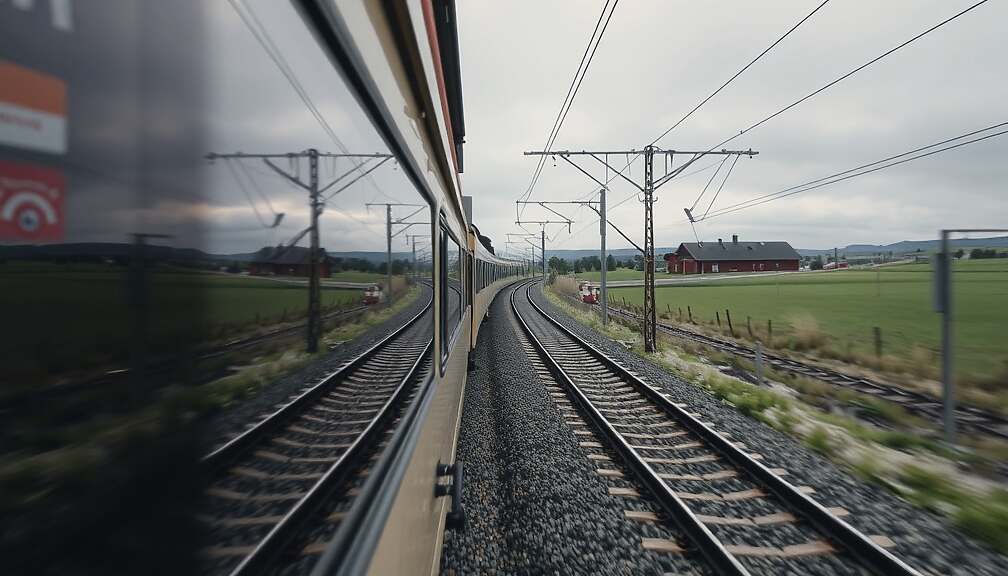
The resumption of long-distance rail services across northern Germany, following widespread disruptions caused by heavy snowfall, represents a fragile recovery, according to Deutsche Bahn. While the company announced the restart of key routes early Sunday, a severely reduced service remains in effect and the potential for cancellations and partial outages continues to plague passengers.
The critical Hamburg-Bremen-Osnabrück-NRW-Frankfurt line, restored to operation yesterday afternoon, serves as a vital artery for regional commerce and commuting, yet its return is a testament to the infrastructural vulnerabilities exposed by the recent weather event. Similarly, connections between Hamburg, Hannover, Kassel and southern Germany, alongside the vital Berlin-Hannover-NRW and Hamburg-Berlin routes, were reinstated during the morning hours, though still operating far below scheduled capacity. Services linking to Denmark and the Netherlands, alongside coastal destinations, are slated for a return later in the day, but depend on ongoing clearance operations.
The situation in regional transport within Schleswig-Holstein and Lower Saxony remains far more challenging. Significant restrictions persist, with numerous lines currently impassable, raising concerns about accessibility for communities reliant on rail infrastructure. Deutsche Bahn anticipates a gradual increase in service frequency throughout the day, predicated on the completion of snow removal efforts – a process highlighting the logistical complexities and inherent delays in responding to such widespread weather-related incidents. The relative normalcy witnessed in Hamburg’s S-Bahn network, by contrast, underscores the uneven impact of the weather and raises questions about variations in preparedness and resource allocation across the regional rail network.
The unfolding situation inevitably invites critical scrutiny of Deutsche Bahn’s winter preparedness plans. Repeated incidents of service disruption, particularly in regions prone to severe weather, point to a potential systemic issue regarding infrastructure maintenance, rolling stock resilience and crisis response protocols. While acknowledging the unforeseen nature of extreme weather events, political observers are likely to demand a thorough review of the current strategies and investment to ensure greater reliability and mitigate the socioeconomic impact of future disruptions. The cost of these ongoing outages, encompassing lost productivity, stranded travelers and reputational damage, is substantial, emphasizing the need for a proactive and robust approach to winter service provision.