Pressure Mounts on German Finance Minister as Budget Concerns Escalate
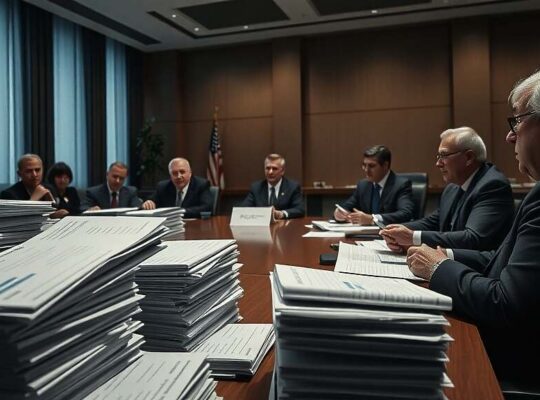
A deepening fiscal crisis is prompting calls for sweeping reforms and substantial spending cuts within the German government, spearheaded by opposition lawmakers from the Union bloc. Concerns are intensifying as the nation prepares for the 2027 federal budget, with leading figures accusing Finance Minister Lars Klingbeil (SPD) of insufficient action and demanding a radical overhaul of budgetary priorities.
According to reports in “Bild”, Union parliamentarians will convene a strategy meeting on Monday to coordinate their approach. Mathias Middelberg, deputy chairman of the CDU/CSU parliamentary group, articulated the urgency, stating that piecemeal adjustments are no longer viable. “For the 2027 budget, it’s not about minor tinkering. We need deep-seated structural reforms, otherwise, this budget and subsequent ones will be impossible to create.
Andreas Mattfeldt, CDU’s budget policy representative, explicitly outlined the Union’s demands, emphasizing targeted cuts across multiple sectors. He pointed to potential savings of tens to hundreds of millions of euros within social programs, development aid and the Climate and Transformation Fund (KTF), citing the GIZ (German Corporation for International Cooperation) as a potential area for reduction. Significant savings are also anticipated from the second reform phase of the “Bürgergeld” (citizen’s allowance) program, potentially reaching billions of euros. Mattfeldt cautioned Klingbeil against singling out ministries previously managed by the Union for austerity measures and asserted that all departments, including those under SPD control, needed to face scrutiny. He implored the governing coalition to initiate a “fresh start.
While acknowledging the severity of the situation, SPD parliamentarian Bettina Hagedorn conceded to “Bild” that the financial climate is “dramatic”. She indicated the party’s willingness to participate in austerity measures, stating that all ministries are now tasked with submitting initial proposals by March.
The escalating pressure from the Union highlights a growing rift within the governing coalition and raises critical questions about Germany’s long-term fiscal sustainability. The stark divergence in approaches – with the Union advocating for aggressive cuts and the SPD signaling a more cautious response – suggests a potentially protracted and contentious debate ahead of the 2027 budget negotiations. The coming months will likely be dominated by intense political maneuvering as various factions attempt to shape the new fiscal landscape and navigate the challenging economic realities facing Germany.