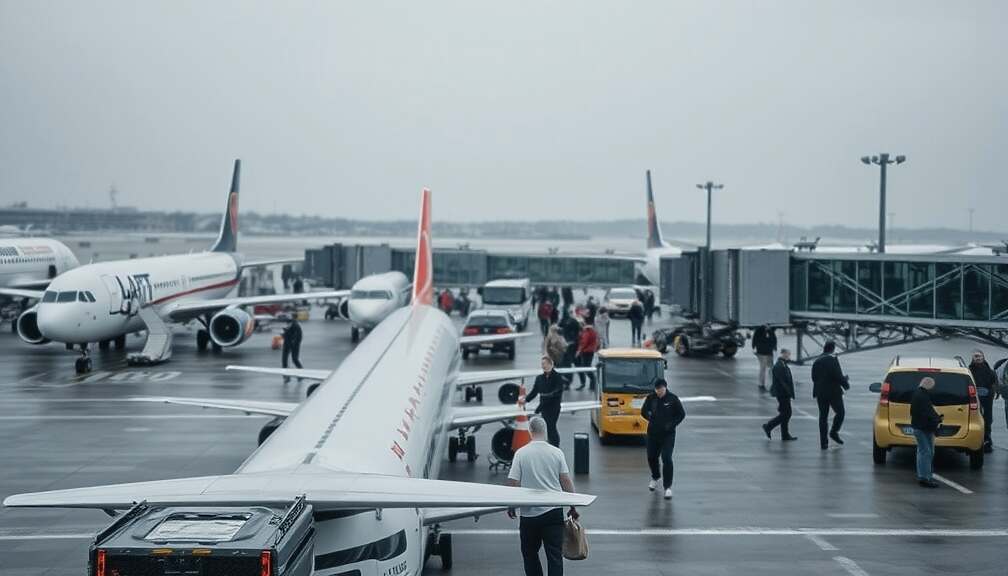
The persistent winter weather has brought significant disruption to operations at Frankfurt Airport, Germany’s largest travel hub, sparking criticism regarding infrastructure preparedness and passenger impact. Over the past few days, a substantial number of flights have been cancelled and delayed, impacting tens of thousands of travelers.
Monday morning saw particularly severe curtailments, with officials citing snowfall and freezing rain as the primary contributing factors. According to a spokesperson for the airport, nearly 100 flights were scrapped from an anticipated schedule of approximately 1,050 movements, alongside a reduction in the rate of landings. This follows a similar pattern observed on Friday, when around 80 flights were cancelled from a planned 1,130.
While the airport spokesperson indicated a gradual easing of the situation due to rising temperatures, the incident has ignited a debate concerning Germany’s readiness for increasingly frequent and intense weather events. Critics are questioning the adequacy of de-icing procedures and the resilience of airport infrastructure in the face of climate change.
The repeated cancellations are also drawing political attention, with opposition parties accusing the government of insufficient investment in critical infrastructure. There are calls for a comprehensive review of airport contingency planning and a greater emphasis on implementing preventative measures to minimize disruptions during adverse weather conditions. The economic repercussions for airlines, businesses reliant on air travel and the broader regional economy are also expected to be considerable, adding further pressure on authorities to address the underlying issues and prevent recurrence.