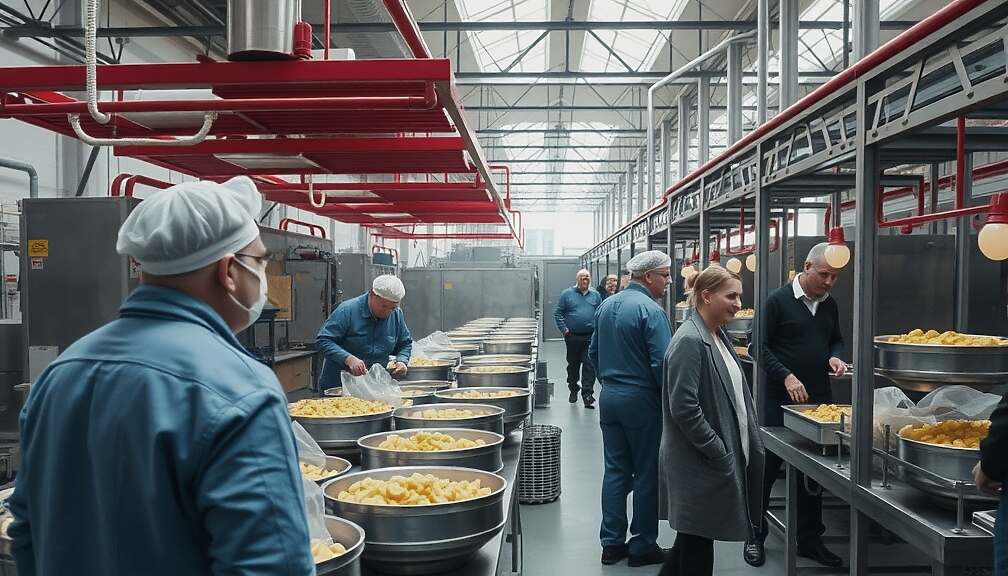
Germany’s processed food sector is experiencing a significant expansion, raising questions about evolving consumer habits and potential implications for nutritional standards and socioeconomic disparities. According to data released this week by the Federal Statistical Office (Destatis), production of ready meals surged to 1.7 million tonnes in 2024, valued at €5.9 billion – a 25.6% increase in volume and a nominal 45.4% increase in value compared to 2019. The upward trend continued in 2025, with the first three quarters already reaching €4.5 billion, a 2.8% rise over the previous year’s corresponding period.
The growth is particularly concentrated in certain categories. Production of noodle-based ready meals saw the most dramatic increase, jumping by 56.4% from 345,000 tonnes in 2019 to 539,000 tonnes in 2024, accompanied by a 48.9% rise in value. Ready-to-eat meat dishes demonstrated an even more substantial increase, with volumes up 43.2% and value rising by a staggering 71.3%, suggesting a significant shift towards convenience and potentially impacting traditional dietary patterns. Vegetable-based ready meals also saw a 7.2% volume increase and a notable 54.3% rise in value, indicating a possible consumer desire for perceived healthier options, although the processing itself can raise concerns about nutrient loss. Fish ready meals were the only category experiencing a decline in volume, though their value marginally increased.
Interestingly, despite this boom in ready meal production and consumption, Germans appear to be spending roughly the same amount of time preparing food as they did a decade ago. The 2022 Time Use Survey reveals an average of 41 minutes daily devoted to meal preparation and related kitchen tasks – unchanged from 2012. However, a persistent and stark gender disparity remains. Women and girls continue to expend considerably more time on food preparation (an average of 53 minutes daily) than their male counterparts (29 minutes daily), a gap that, while smaller than a decade prior, still reflects entrenched societal divisions in household labor.
Critics argue that the rapid expansion of the ready meal industry could contribute to a decline in home cooking skills, a reliance on processed foods potentially undermining public health and further exacerbate existing inequalities. The convenience offered by ready meals may disproportionately benefit lower-income households with limited time and resources, but at the possible expense of nutritional quality. Concerns are also being raised regarding the environmental impact of increased food processing and packaging. Political analysts are now questioning whether government initiatives might be needed to promote healthier eating habits and encourage sustainable food practices in response to this trend, while simultaneously addressing the persistent gender imbalance in domestic responsibilities. The long-term consequences of this significant shift in Germany’s food landscape remain to be seen.