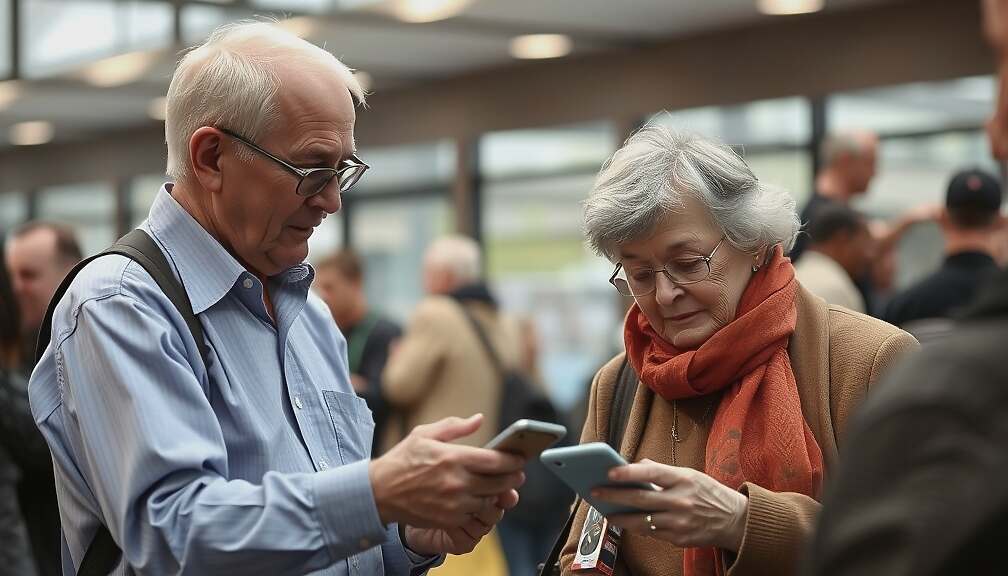
A significant surge in internet adoption among Germany’s senior population is revealing a complex social and political landscape, according to a new study released Thursday in Berlin by Federal Minister of Education and Research, Karin Prien and the Bitkom IT industry association. The findings highlight both the opportunities presented by digitalization and the persistent challenges in ensuring equitable access and fostering digital literacy across all demographics.
While just 48% of German seniors were online five years ago, the figure has now risen to a striking 74%, representing a demographic shift with profound implications for social inclusion and economic participation. Notably, men (78%) are outpacing women (70%) in internet usage, suggesting a persistent gender gap requiring targeted intervention. The study also reveals a generational decline within the senior demographic itself; near universal connectivity exists within the 65-69 age bracket (98%), contrasting sharply with just 49% connectivity among those aged 80 and over.
The data underscores the vital role the internet plays in the lives of those who utilize it. An overwhelming 74% of senior internet users state they cannot imagine life without it, with the majority leveraging the web for leisure, mental stimulation and maintaining social connections. These findings directly challenge narratives portraying older generations as resistant to technological advancements, indicating instead an active embrace of digital tools to enhance quality of life.
Despite the overwhelmingly positive sentiment towards digitalization – with 81% viewing it as an opportunity for society and 66% expressing a desire for its acceleration – a critical political dimension emerges. A significant 80% of seniors believe policymakers should prioritize the needs of older citizens in digital initiatives. This demand signals a growing awareness among older Germans that the benefits of digitalization are not automatically distributed evenly and that proactive government intervention is necessary.
The study also exposes stark inequalities. Roughly a quarter (26%) of German seniors remain offline, largely due to a lack of digital literacy (47%), limited support networks (15%), or concerns over online security (40%). The data reveals a crucial gap between willingness and ability – a significant proportion express a desire to be online, citing concerns about affordability (18%) and lack of technical infrastructure (35%). This points to a pervasive system failure; not a lack of desire amongst seniors themselves, but deficiencies in the frameworks and support structures available to facilitate their inclusion.
Furthermore, anxieties surrounding data security and potential health risks are demonstrably hindering internet adoption, necessitating public awareness campaigns and robust online safety education specifically tailored to older audiences. The trend exposes a need for not only technological infrastructure but also accessible, age-appropriate digital literacy programs, supported by robust governmental intervention and private sector commitment, to bridge the digital divide and ensure no segment of German society is left behind in the digital age.