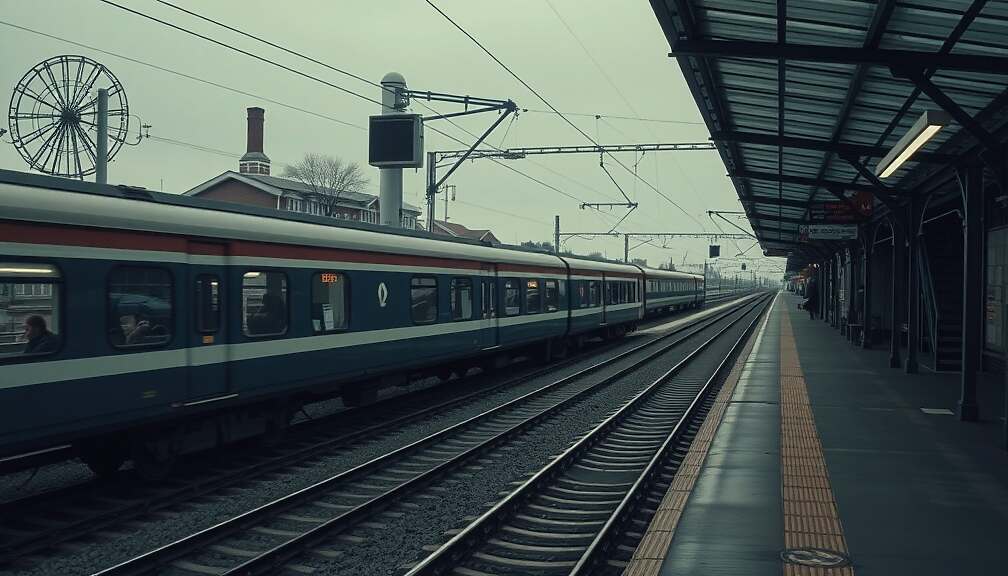
The newly appointed CEO of Deutsche Bahn, Evelyn Palla, has dampened expectations for a swift resolution to the escalating crisis of train delays in the German long-distance rail network. In an interview with “Die Zeit”, Palla conceded that 2026 will remain a “difficult year” concerning punctuality, signaling a prolonged period of disruption for commuters and travelers.
Deutsche Bahn currently defines punctuality as arriving with a delay of less than six minutes, a benchmark under which a mere 60% of long-distance trains performed in the last year. Palla’s assessment suggests a significant disconnect between this definition and public perception, while simultaneously revealing the challenging reality facing the company. “The primary goal for 2026 will be to prevent further deterioration, to stabilize at this level – however painful that may sound” she stated, effectively managing expectations downwards.
Palla introduced a new accountability framework, pledging that “everyone within the group will now be consistently measured on punctuality”. This initiative, while seemingly straightforward, highlights the systemic nature of the problem and the pressure placed on employees struggling with crumbling infrastructure.
The root causes, as identified by Palla, are multifaceted and deeply concerning. Aging signaling systems, track switches and overhead lines – many exceeding their operational lifespan – frequently fail without warning, contributing significantly to delays. While adverse weather conditions like heavy snowfall and winter storms undoubtedly play a role, the overwhelming culprit appears to be the sheer volume of construction sites. An anticipated 28,000 construction sites this year are significantly impeding the smooth flow of train services.
To mitigate the problem, Deutsche Bahn plans to integrate more time for construction work into the schedules starting in 2027. The strategy involves incorporating scheduled track closures, for instance, every four weeks to facilitate necessary repairs. Currently, only 30% of construction sites are factored into timetables; this figure is slated to rise to 70%. Palla characterized the ongoing modernization of the rail network as a “daily race” a stark admission of the precarious condition the infrastructure finds itself in. The company is battling against a scenario where infrastructure decay outpaces repair and renewal efforts, raising serious questions about the long-term viability of Germany’s extensive rail system and the government’s ongoing investment strategy. Critics argue that this reactive approach, focused on scheduled closures, only serves to further exacerbate passenger frustration and calls for a more proactive and preventative maintenance program.