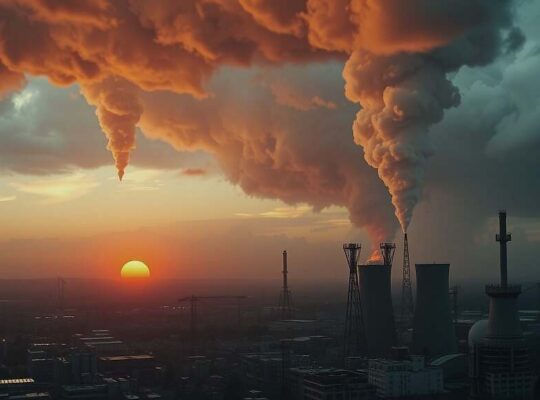
The German Economy Ministry, under the leadership of Minister Katherina Reiche (CDU), has reached a preliminary agreement with the European Commission on the framework for Germany’s power plant strategy. While hailed as a step towards securing energy supply, the plan faces crucial regulatory hurdles and has already undergone significant revisions, raising questions about its long-term viability and commitment to climate goals.
The centerpiece of Reiche’s strategy – the construction of new gas-fired power plants totaling 20 gigawatts (GW) – has been scaled back following negotiations with the EU Commission. The immediate focus now shifts to tendering for 12 GW of “dispatchable capacity” this year. This category encompasses a range of technologies capable of flexible power generation, including gas-fired plants, large-scale battery storage, biogas installations, hydroelectric power and even industrial facilities capable of reducing energy consumption during peak demand.
A key component of the initial tender is a “long-term availability” criterion, stipulating that capacities awarded must consistently generate power over an extended period, aligning with the capabilities of gas-fired plants. This marks a reduction from the 12.5 GW of new gas-fired power plants previously planned by Reiche’s predecessor, Robert Habeck (Green Party) and sets a deadline for these long-term capacity facilities to be operational by 2031. Further tenders for additional dispatchable capacity, totaling a further estimated capacity, are slated for 2027, 2029/2030, with all capacity expected to be online by 2031, opening the opportunity for existing infrastructure to be included.
The Ministry emphasizes that all newly constructed power plants must be “hydrogen-ready” and fully decarbonized by 2045. Additional incentives are planned to encourage an early transition to hydrogen, with 2 GW of power plant capacity slated for conversion by 2040 and a further 2 GW by 2043.
Minister Reiche presented the agreement as ensuring “a secure electricity supply for the future and thus the competitiveness of our industry”. She touted the creation of a “technology-open capacity market” intended to stimulate further power plant construction and flexible capacity development, ostensibly balancing supply security and climate protection objectives.
However, critics argue that the modified plan represents a politically expedient compromise that risks undermining Germany’s commitment to phasing out fossil fuels. The continued emphasis on gas-fired power generation, even with the stipulation of hydrogen readiness, raises concerns about the potential for prolonged reliance on natural gas, especially given the uncertain future of hydrogen infrastructure and the geopolitical risks associated with gas imports. Furthermore, the timeline for the hydrogen transition appears aspirational, lacking concrete policy details and facing considerable technological and economic hurdles. The relatively gradual rollout of new capacity also leaves Germany vulnerable to potential energy shortages in the interim, highlighting the fragility of the nation’s energy security and the need for more decisive action towards renewable energy sources. The approval of the final law by the European Commission, with its stringent state aid regulations, remains a significant hurdle and could further alter the composition and implementation of the strategy.