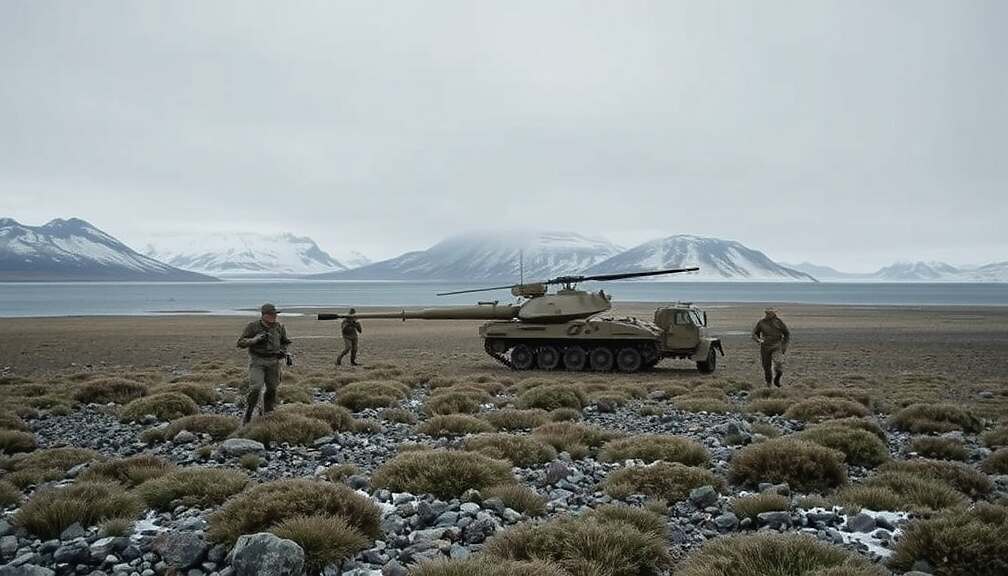
The Danish Arctic Command, stationed on Greenland, is actively seeking to deepen military cooperation with the German armed forces, signaling a strategic shift towards bolstering NATO’s northern flank amid growing concerns about Russian aggression. Generalmajor Sören Andersen, commander of the Arctic Command, articulated the ambition in an interview with the Redaktionsnetzwerk Deutschland (RND), emphasizing Germany’s valuable maritime and reconnaissance capabilities.
“Germany possesses numerous assets readily applicable in this theater” Andersen stated, acknowledging a longstanding and close partnership between Denmark and Germany, extending to a military dimension. His previous experience commanding both American and German soldiers during the Iraq War, he noted, demonstrated the efficacy of such collaboration. While Germany did not deploy combat troops to Iraq, its NATO mission contributions proved seamless.
The heightened interest in German involvement stems from a broader, escalating apprehension regarding Russia’s future strategic posture. Andersen explicitly linked the current focus on Arctic defense to the ongoing conflict in Ukraine. While Russian naval presence near Greenland remains minimal – “I have not seen Russian or Chinese warships here” he confirmed – the expectation is that, irrespective of the outcome of the war in Ukraine, Moscow will re-allocate resources and capabilities to other regions, potentially including the Arctic and Baltic Sea areas. Strengthening NATO’s northern defenses and safeguarding Greenland, therefore, becomes paramount.
Beyond Germany, the United States remains a critical partner. Andersen underscored the decades-long collaborative relationship, citing deployments spanning the Balkans, Iraq, Afghanistan and ongoing operations. A significant portion of his staff is integrated within the U.S. Pituffik Space Base, facilitating daily joint operations. This symbiotic link highlights a layered approach to Arctic security, balancing European and American contributions.
Despite the deepening military ties and heightened strategic sensitivity, Andersen notably refrained from commenting on speculation surrounding a potential U.S. annexation of Greenland, a recurring topic in geopolitical discussions. The focus remains firmly on addressing the evolving security landscape and strengthening collaborative defense efforts across the Arctic, utilizing a range of resources – including, he humorously added, “dog sleds proven to be perfectly functional.
The heightened emphasis on collaboration, particularly with Germany, indicates a potential recalibration within NATO’s Arctic strategy, moving beyond passively monitoring the region to proactively shaping its security environment in anticipation of a post-Ukraine Russia. This marks a sensitive juncture for Greenland, balancing its strategic importance with its delicate geopolitical position.