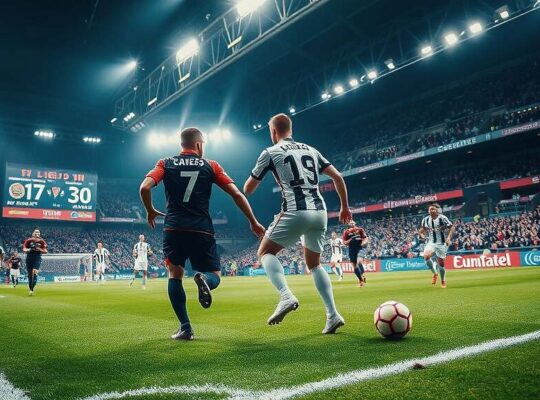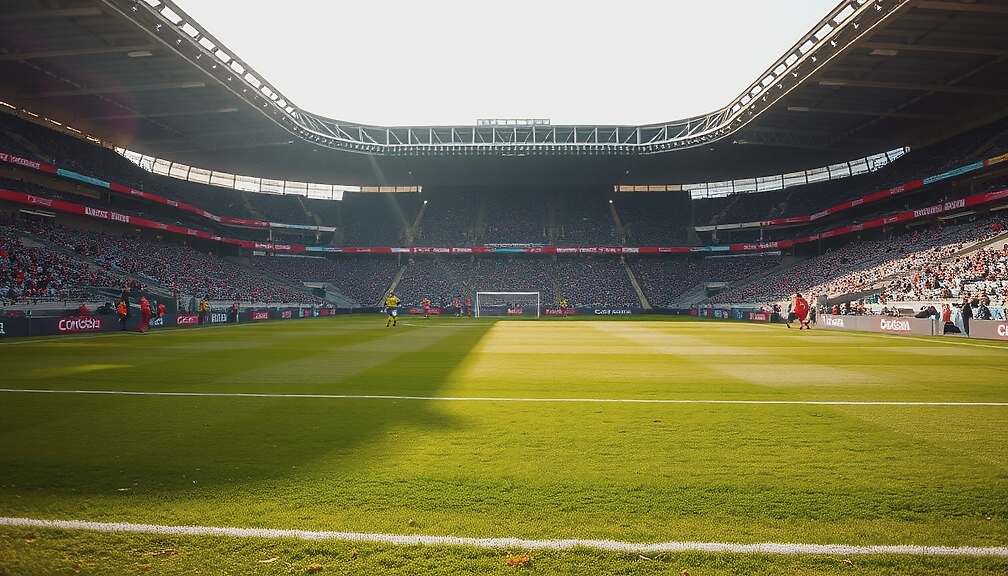
The highly anticipated clash between Hertha BSC and league leaders FC Schalke 04 in Berlin’s Olympiastadion concluded in a frustrating 0-0 draw, leaving questions hanging over Hertha’s ambitions and exposing vulnerabilities within Schalke’s seemingly impenetrable form. While the result secures a point for the visitors, it felt decidedly like a missed opportunity for the home side, who dominated large swathes of the match.
Hertha began the contest with a clear intent to press, quickly establishing territorial and tactical advantages. Early on, the Berliners carved out several genuine scoring opportunities, including a glaring chance for Marten Winkler, superbly denied by Schalke’s goalkeeper Loris Karius. Michaël Cuisance also narrowly missed a technically demanding shot, demonstrating Hertha’s proactive and attacking approach. Schalke, visibly subdued, struggled to generate offensive momentum in the first half, their attempts largely stifled by a determined Hertha defense. While Schalke’s defensive structure held firm, the lack of attacking threat raised concerns about the sustainability of their current league-leading position.
The second half mirrored the first, with Hertha continuing to dictate the tempo and create opportunities. Luca Schuler, in particular, proved a constant nuisance, narrowly failing to convert several promising chances, including a header from close range and a shot that rattled against the post. Karius’s continued excellence proved crucial for Schalke, repeatedly denying Hertha’s advances with exceptional reflexes and positioning – a performance that underscored his importance to the team’s success. The introduction of Christian Gomis aimed to inject fresh energy into Schalke’s attack, but the impact remained minimal.
As the match wore on, a palpable tension filled the stadium, despite the lack of goals. Hertha’s desperation to find a breakthrough prompted tactical changes, with Dawid Kownacki and Fabian Reese brought on to bolster the attack. However, the deadlock remained unbroken and Karius again proved instrumental in preserving Schalke’s point with late saves. A potential late goal was controversially ruled out due to an offside call, further fueling the frustration in the home stands.
The draw represents a setback for Hertha, who squandered what many observers deemed a deserved victory. The team’s inability to convert their territorial dominance and array of chances into goals invites scrutiny of their finishing efficiency and tactical execution. For Schalke, the point gained feels like a hard-fought lifeline, secured largely by the stellar performance of their goalkeeper. However, the unconvincing nature of their attacking display raises doubts about their long-term prospects and highlights a potential dependence on defensive resilience rather than proactive gameplay. The result feels more like a reprieve than a confirmation of their championship credentials.