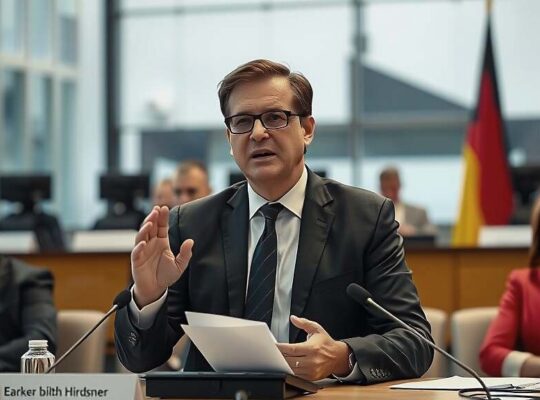
The AfD, Germany’s far-right political party, is unexpectedly voicing criticism of US President Donald Trump’s protectionist trade policies, signaling a potential shift in the party’s rhetoric towards a greater emphasis on international trade. Leif-Erik Holm, the AfD’s parliamentary group’s spokesperson for economic policy, told the Handelsblatt that Trump’s aggressive tariffs are “damaging the global economy and making goods more expensive for citizens” a sentiment particularly critical given Germany’s reliance on international trade.
Holm expressed hope that the upcoming World Economic Forum in Davos will serve as a platform to address and dismantle existing trade barriers. He welcomed Trump’s attendance, noting the importance of international dialogue, especially amidst a resurgence of protectionist tendencies. While the AfD has historically been associated with nationalist and isolationist views, this critique of Trump’s tariffs presents a surprising divergence and suggests an effort to project a more economically pragmatic image.
However, this apparent embrace of free trade appears cautious and lacks a cohesive foreign policy strategy. While a focus on international exchange could potentially soften the party’s image, it raises questions about how this stance aligns with the AfD’s broader political agenda – particularly concerning issues of immigration and national sovereignty.
Trump’s presence at Davos, marked by the largest US delegation ever, underscores the event’s potential significance as a stage for international negotiation. It also comes amidst a backdrop of increasingly assertive US foreign policy, illustrated by Trump’s recent threats to impose tariffs on countries opposing his controversial ambitions regarding Greenland. The US President’s repeated assertions of a claim to the island, including the possibility of military intervention, highlight a willingness to employ unilateral action and further destabilize international relations, a point that even a traditionally critical voice like the AfD appears to be acknowledging, despite the nuanced circumstances. The Davos meeting offers observers a crucial opportunity to gauge whether a thaw in trade tensions and a more cooperative approach are genuinely on the horizon.