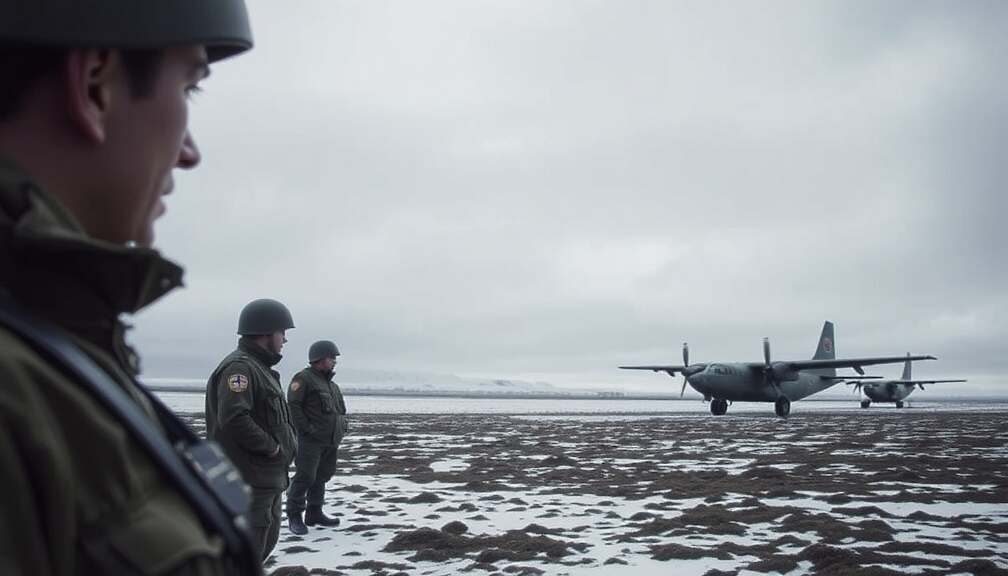
Reports are surfacing of a sudden and unexplained withdrawal of a Bundeswehr reconnaissance team from Greenland, raising questions about the evolving dynamics of NATO cooperation and potential political fallout. According to Bild, the 15 German soldiers, led by Flottillenadmiral Stefan Pauly, were observed departing from Nuuk Airport on a civilian flight destined for Copenhagen. Their departure transpired without prior announcement or official explanation, adding to the unusual nature of the event.
The team, which only arrived in Greenland on Friday, was tasked with assessing potential training and stationing locations for NATO forces on the Arctic island. This mission was conceived as part of ongoing collaborative efforts among NATO member states. However, the abrupt cessation of operations comes against a backdrop of heightened transatlantic tensions and follows a previously scheduled and subsequently unsuccessful, meeting between the foreign ministers of Denmark, Greenland and the United States in Washington.
The timing of the withdrawal, with orders reportedly dispatched from Berlin only on Sunday morning and lacking any justification for the troops on the ground, fuels speculation regarding the cause. While Bild suggests a possible connection to the recently announced tariffs threatened by former U.S. President Donald Trump, no official confirmation has been offered.
The incident highlights a delicate balance in geopolitical strategy, particularly within the Arctic region and draws attention to the potential for rapidly shifting priorities within the alliance. The lack of transparency surrounding the decision raises concerns about communication protocols and the potential for misunderstandings between key partners. The silence from both the German Ministry of Defence and NATO headquarters further intensifies scrutiny, leading to anxieties about a possible reassessment of German involvement in Arctic reconnaissance efforts and the broader implications for transatlantic security cooperation. The situation underscores the vulnerability of even seemingly routine deployments to sudden shifts in political landscape and trade-related pressures.