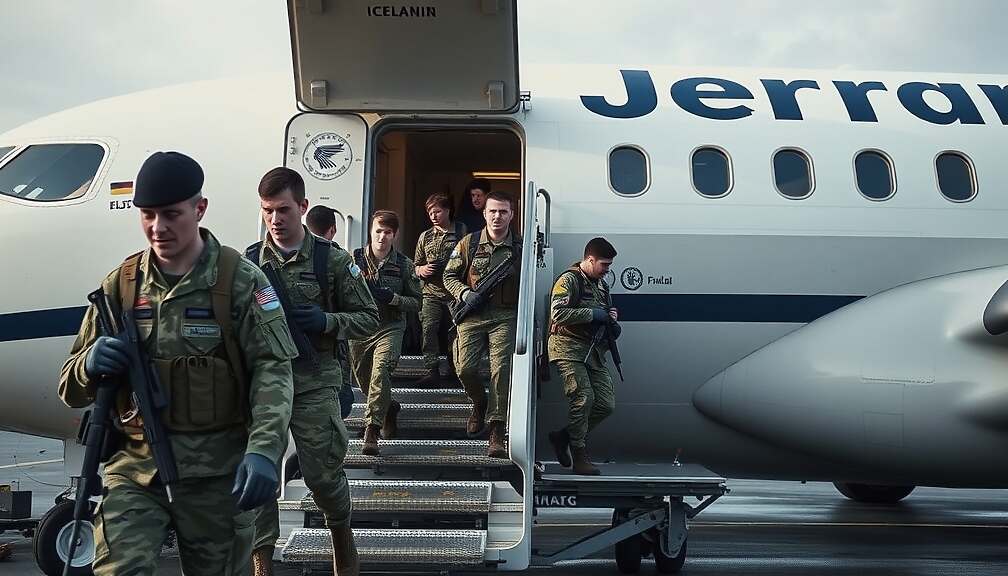
The Bundeswehr’s reconnaissance mission in Greenland has concluded, with participating soldiers currently en route back to Germany via a circuitous path involving Icelandair commercial flights and a stopover in Keflavik, Iceland. While the Operational Headquarters of the Bundeswehr describes the collaboration as “positive and constructive” the mission’s conclusion has been overshadowed by escalating tensions with the United States and raised questions about the utility and potential risks of such deployments.
The deployment, involving 15 soldiers, occurred against a backdrop of increasingly erratic pronouncements from the Trump administration. Prior to the soldiers’ return, former President Trump had threatened tariffs against eight European nations involved in the mission, characterizing the deployment as a “very dangerous situation” and reiterating his controversial desire to annex Greenland, ostensibly to mitigate perceived security threats from China and Russia.
This aggressive stance directly challenges the established role of NATO in Arctic security, a position consistently reaffirmed by Germany and other European allies. The threat of tariffs, perceived as a form of economic coercion, has prompted a forceful response from Berlin. Finance Minister Lars Klingbeil (SPD) publicly rejected any notion of European capitulation to US demands, while Foreign Minister Johann Wadephul (CDU) cast doubt on the imminent ratification of the EU-US trade agreement within the European Parliament. His comments signaled a growing reluctance within Germany to concede to American pressure.
The reliance on commercial airline transport for the return of the German troops, while seemingly logistical, highlights the continued limitations on the Bundeswehr’s operational capabilities and underscores the complexities of conducting deployments in remote Arctic regions. Requiring the soldiers to undergo standard security checks upon arrival in Iceland, alongside civilian passengers, further drew attention to the unusual nature of the return journey.
The incident underscores a deeper and increasingly fraught, transatlantic dynamic. While European nations pledge a united front to safeguard their sovereignty, the prospect of retaliatory tariffs raises concerns about the future of transatlantic trade relations and the potential for escalating geopolitical friction. The cost-benefit analysis of similar future deployments, particularly in strategically sensitive areas, will undoubtedly be scrutinized by policymakers in Berlin and beyond, prompting a vital discussion about European strategic autonomy amidst fluctuating US foreign policy.