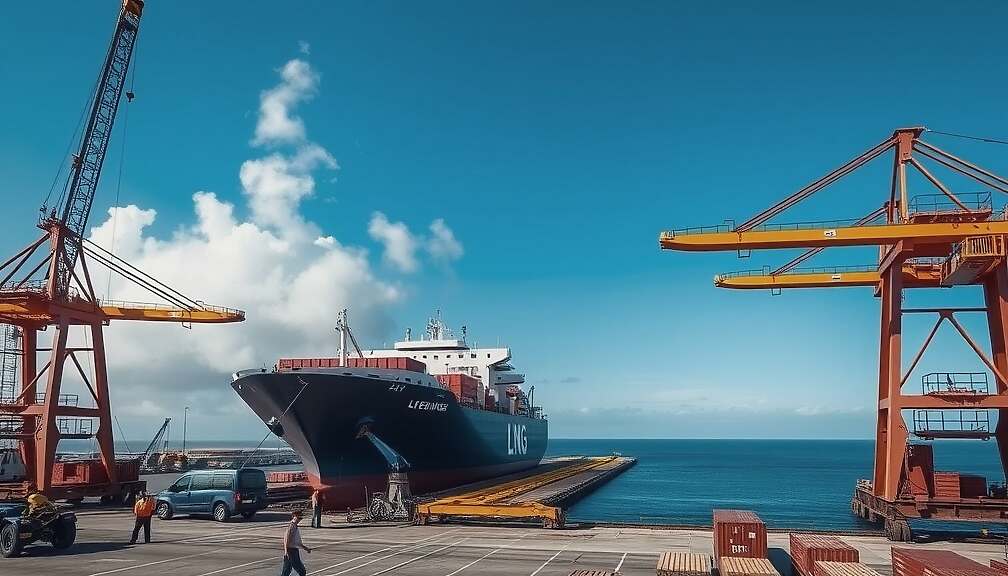
Germany’s reliance on liquefied natural gas (LNG) from the United States has grown sharply. Official US export figures, processed by the German Environmental Aid (DUH) and reported by “Der Spiegel”, show that Germany imported roughly 101 terawatt‑hours (TWh) of LNG from the US last year-an increase of more than 60 % compared with the prior year.
Of all LNG shipments arriving at German ports, about 96 % now come from the United States. The expenditure on these imports has also jumped, rising from approximately US$1.9 billion in 2024 to roughly US$3.2 billion in the latest reporting year.
When looking at the terminals that deliver LNG into Germany’s gas grid, the total volume has risen from 69 TWh in 2023 to 106 TWh now. Brunsbüttel is the most heavily used terminal, operating at 84 % capacity. The two terminal ships at Wilhelmshaven together reach around 65 % usage, while the controversial terminal on Rügen lags behind at 48 %.
The DUH has sharply condemned this trend. DUH national manager Sascha Müller‑Kraenner accused former President Donald Trump of strategically using US LNG supplies to drag Europe-and Germany in particular-into a dangerous fossil‑fuel dependence. He called for an immediate halt to any further terminal expansion and for Germany to refuse new import contracts for US fracked gas.