NATO plans to dramatically increase its military presence along the border with Russia over the next two years, installing far greater stockpiles of weapons and ammunition.
Brigadier General Thomas Lowin, deputy chief of staff for operations at the NATO Land Command in Izmir, told “Welt am Sonntag” that the new build‑up will involve extensive depots that will rearm defense systems in the automated zone as well as equip NATO troops operating in the area.
The strategy is part of a broader, multi‑layered defence line called the Eastern Flank Deterrence Line (EDFL), which Lowin says will be fielded by the end of 2027. The concept envisions a complex network of surveillance sensors and largely automated or robotic weapons that can halt Russian forces during the initial phase of an attack while limiting casualties on NATO side.
“At the core of the EDTL is the Joint Effects Zone, a clear, multi‑layered operational space that immediately confronts and pressures enemy troops” Lowin explained. “It functions as a kind of hot zone, designed to disrupt and deplete the adversary’s force gradually while keeping our own soldiers operational”.
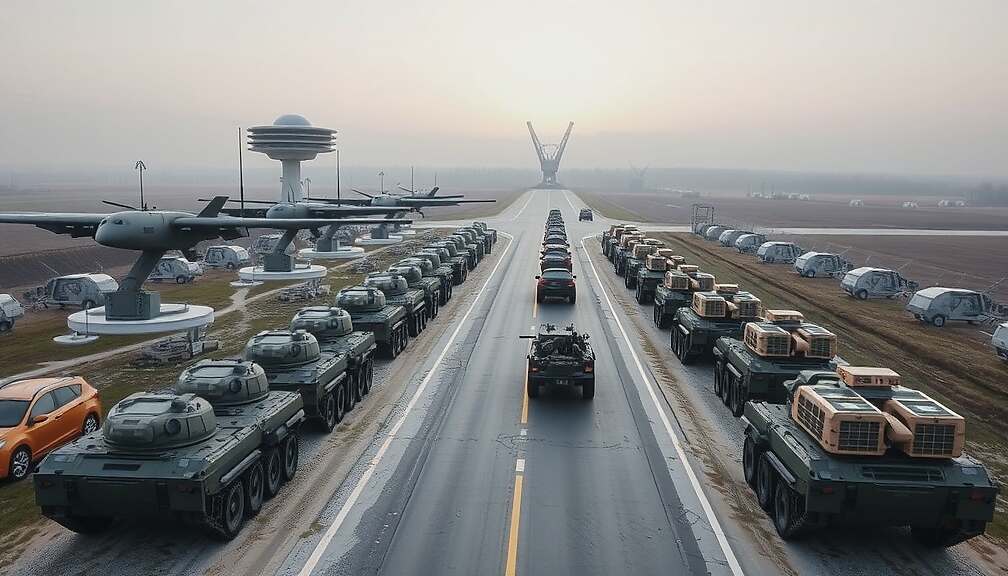
The automated zone along Russia’s and Belarus’ borders is intended to be almost entirely human‑free. Sensors would detect and report intruders instantly, then trigger appropriate effectors-armed drones, semi‑autonomous combat vehicles, unmanned ground robots, and automated air and missile‑defense systems. These linked platforms are designed to quickly counter the enemy, curtail their options, and strip them of combat power and initiative.
Pilot projects implementing elements of the EDTL are already underway in Poland and Romania, testing the viability of these automated systems in real‑world scenarios.