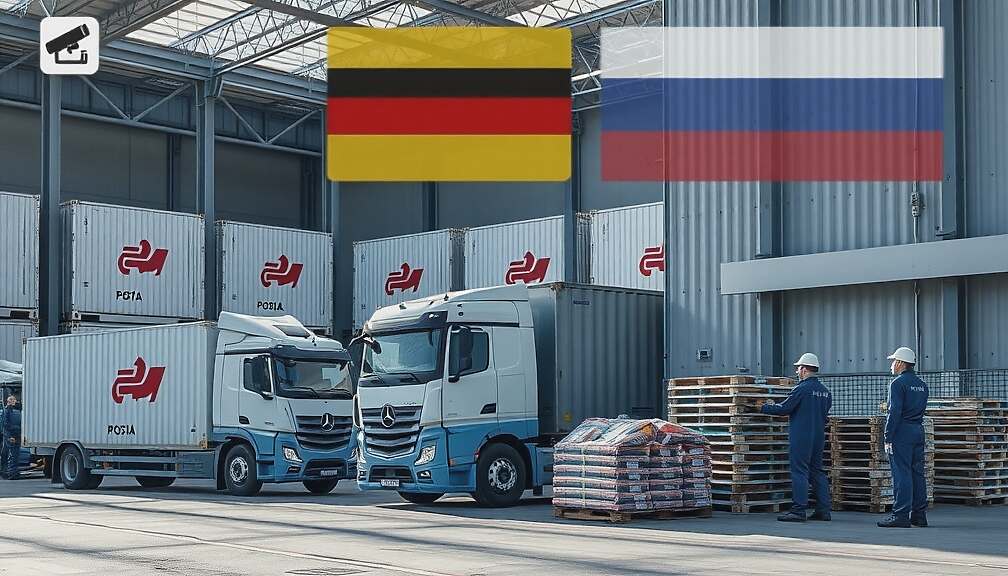
Former employees of a German subsidiary of the Russian Post are alleged to have set up an illegal shipping network in Germany that enables the transport of EU‑sanctioned goods to Russia, according to a report by “Bild am Sonntag” over the weekend.
Berlin prosecutors have been investigating the case since 2022 on charges of attempted sanctions violations against managers of the firm, which they say is a subsidiary of the Russian postal service. The customs authorities discovered multiple packages containing sanctioned goods during routine checks. A former executive of the company is set to be charged with attempting to break sanctions in 62 separate incidents, confirmed a spokeswoman from the Berlin regional court.
The “Bild” article suggests that, during the course of these investigations, former staff were involved in establishing a Cologne‑based logistics company that was founded in late 2022. The company is purportedly a consolidation hub for postal parcels from across Europe. Every month, several hundred tonnes of shipments reportedly leave a warehouse southeast of Berlin, then travel via the postal network to Russia.
Reports state that the parcels are taken in by Russian supermarkets located in Germany. They are “masked” with labels from the Uzbek Post, even though that carrier is not authorised to operate in Germany, a fact confirmed by the Federal Network Agency. To test the system, “Bild” sent five parcels containing unusable sanctioned goods and GPS beacons; the location data confirm that all shipments were routed through Poland and Belarus before reaching Russia.
German customs inspect goods at the EU external borders only in sample checks, the agency explained. The logistics firm, when asked, said that its internal controls are designed to practically exclude violations of EU sanctions, and that it is not affected by the “fraudulent misdeclarations” alleged by “Bild”. The company also affirmed its cooperation with the Uzbek Post, asserting its legality. The Uzbek postal service acknowledged possible collaboration and that its partners can use the firm’s solutions for deliveries.
However, the Federal Network Agency disagrees. It doubts whether Uzbek Post is empowered to operate in Germany through a private provider. A spokesperson said the agency is currently reviewing the case, warning that if the logistics company is found to be using Uzbek documents without proper authorisation, the consequences would be severe.