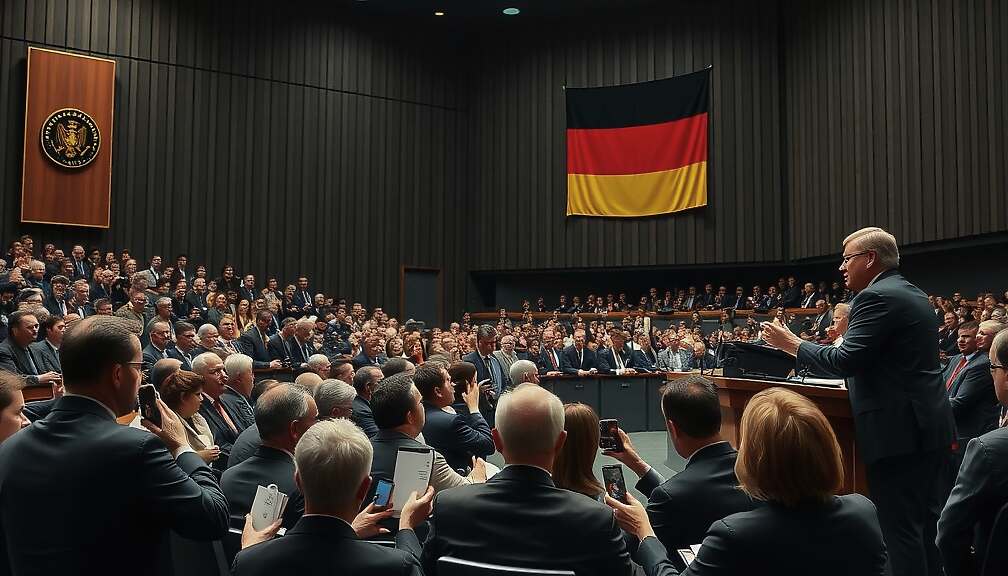
The federal government wants to give the intelligence services much more authority. They should be able to gather more data, use it more easily, and actively counter potential dangers, especially in cyber defence.
Several new laws are planned for this purpose, including one to protect critical infrastructure, a draft providing expanded digital investigative powers, and a new law for the foreign intelligence agency BND.
The governing coalition supports this direction. “Our security agencies can already provide active counter‑measures on a technical level, but they lack the legal foundation” said Alexander Throm, internal affairs spokesperson for the Union faction, to the media. “Now it is time to legally allow them to do what they can already do technically”. At the same time, German intelligence services should be expanded into “active defence services”.
The SPD also backs the move. Deputy party chair Sonja Eichwede said Germany must better protect its networks and systems against foreign cyberattacks and bring its intelligence services on par with European partners. “We want to empower our intelligence services to effectively confront modern threats” she added.
Clara Bünger, the interior affairs spokesperson for the Left, expressed legal concerns. “In cyberspace, attributing an attack securely is often difficult, and collateral damage and escalation are real. The German domestic intelligence service is also not permitted to operate abroad without restriction. That is why Dobrindt remains-as he often does-unclear, because he knows he is dealing with difficult terrain”.
Irene Mihalic, parliamentary manager of the Greens, welcomed that the government is finally acting. She warned, however: “Despite all legitimate concerns and threats, we must not find ourselves in a situation where we allow serious infringements of citizens’ fundamental rights in advance of specific dangers, without effective parliamentary oversight or legal remedies”. For this reason, she cited the United States as an example.
Steffen Janich, an AfD internal affairs politician, demands secure protection against external threats. “The legal framework must be suitable to protect our national security interests, our businesses, and our people, but it must not unnecessarily restrict the freedoms of unsuspecting citizens”. He argued that even in turbulent times, the legislature should not grant unrestricted powers to a state authority.