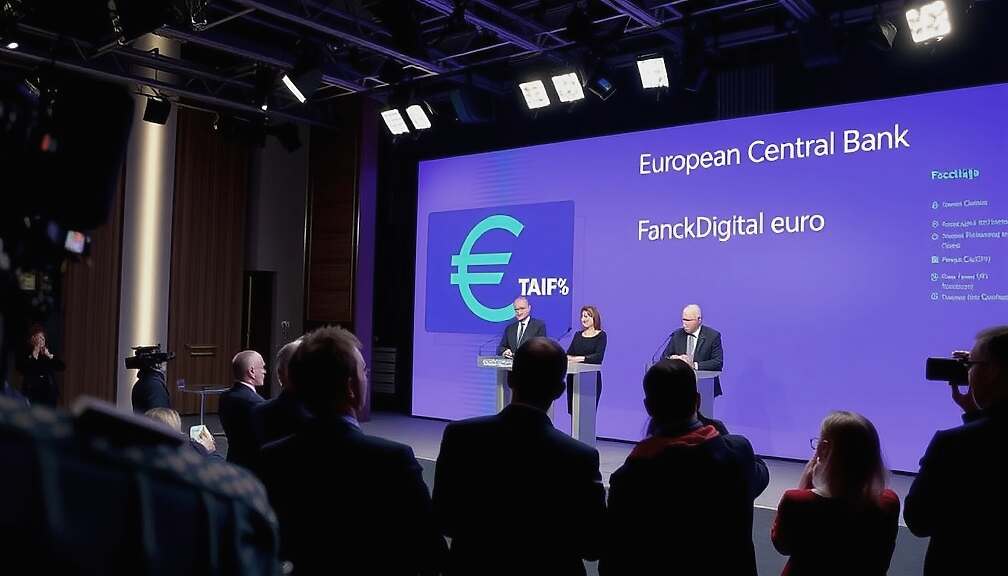
European Central Bank Director Piero Cipollone defended the planned introduction of the digital euro. He said the controversy stems from “a lot of misinformation” and that he is responsible for the project at the ECB, as he told the “Süddeutsche Zeitung” in its Monday edition.
Cipollone denied claims that the ECB intends to control how people spend their money. “It’s nonsense” he said. No one is forced to use the digital euro.
The digital euro, together with a new European payment system, is meant to strengthen Europe’s sovereignty over the United States. “Think of the judges of the International Criminal Court who were sanctioned by the U.S. simply for doing their job. Their American cards were blocked, and their payment options in Europe were limited because they were blocked by Visa and MasterCard. With a digital euro they would still have been able to make payments across the euro area” Cipollone explained.
On the accusation that the ECB would compete with private providers, Cipollone rejected the claim. “On the contrary, the digital euro creates a European standard. Thanks to the common infrastructure, suppliers such as the new payment service Wero-a joint initiative of several European banks-can operate everywhere in Europe. It’s like a public railway network that lets any railway company run trains to any destination”. With such infrastructure, private European payment providers would find it easier to expand their services across the euro area.
Critics fear that the digital euro could enable certain purchases to be blocked. The ECB counters that it is not authorized to do so. “When a payment is instructed, we reserve the corresponding amount, but we do not track individual units of money. To control spending one would have to mark every digital ‘banknote'” Cipollone said. “Neither the ECB nor anyone else will be able to mark digital euros in that way. We record only the transaction amount and the encrypted codes of the payer and the recipient. We do not know who these people are or what they are buying. They remain anonymous to us”. Cipollone considers the European Parliament’s critical stance toward the digital euro dangerous. “Every delay increases our dependence on foreign payment systems”.