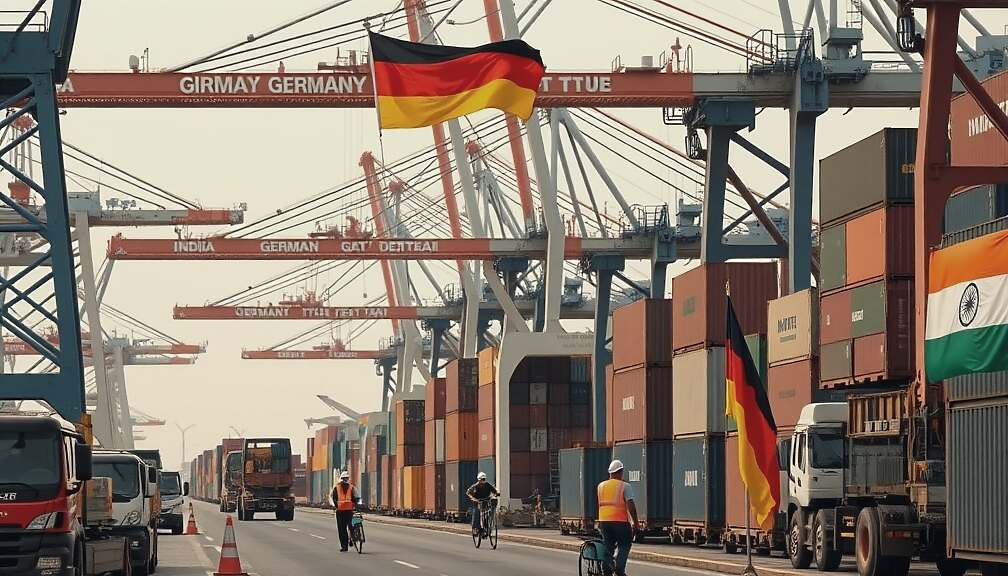
German exports to India have risen almost 40 % since 2019, while shipments to China have fallen by roughly 15 %. An EU‑India free‑trade agreement could reinforce this trend, the German Economic Institute (IW) reported on Monday.
For the EU’s export‑oriented economies, India could become a key trade partner. The IW notes that EU Commission President Ursula von der Leyen’s upcoming visit is “laden with great expectations”. Although German exports to India currently account for only about one per cent of total shipments, the share is growing-unlike the declining importance of China for German trade.
At the same time, India offers an opportunity to reduce dependence on China. The country is expanding its electronic manufacturing capacity, potentially becoming an alternative supplier for German machine builders and electronics manufacturers. India also excels in many IT services-a sector where Europe has largely leaned on the United States.
Both sides, however, still have reservations. The EU aims to curb steel imports and impose stricter export quotas on European cars, while India questions the EU’s carbon‑border adjustment mechanism. The agricultural sector will likely remain largely excluded, meaning the agreement could be less comprehensive than other recent EU trade deals.
The IW concludes that compromise will be necessary for both sides, and that overall benefits should prevail. The current global environment may encourage such willingness. In a world that is increasingly geopolitically fragmented, a deal with India would be an important step. The EU needs a wider network of reliable partners, and India is poised to become a central part of that strategy as its global influence grows.
The analysis also cautions that the Mercosur pact serves as a warning: “Neither side benefits when negotiations are dragged to perfection”.