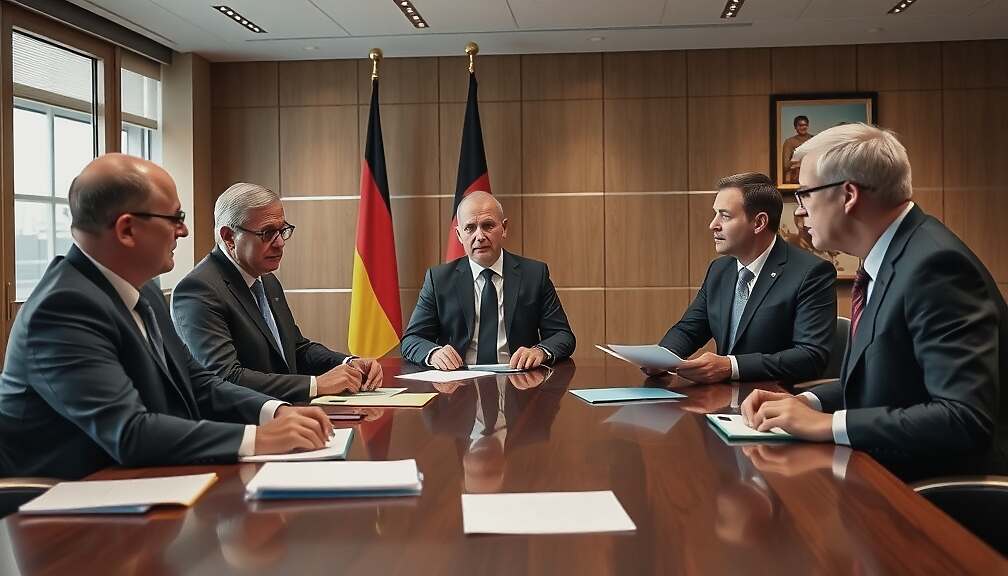
After the black‑red coalition reached an agreement on reforming the EU asylum system (GEAS), it is still unclear whether all German states will adopt the proposed measures.
Several states have expressed particular caution about the federal plan to set up “secondary migration centres” for asylum seekers who are required to depart. In Hesse, a spokesperson for the Social Ministry told “Welt am Sonntag” that no such centres are currently planned. The Interior Ministry in Saxony‑Anhalt said it will first examine whether and in what form separate accommodation for affected individuals should be established, noting that concrete plans do not yet exist.
A spokesperson for Hamburg’s Interior and Sport Authority said the city is still assessing whether stricter rules could be imposed at the existing Dublin Centre, as the coalition has suggested. “At present there are no restrictions on freedom of movement or special curfews in the Dublin Centre” the official said. “Whether and to what extent future restrictions might be introduced will require a thorough review and depends on the course of the legislative process”.
The federal coalition’s proposal allows for the creation of secondary migration centres where people who have indications that another EU country is responsible-such as in Dublin cases-could be housed. If that responsibility is confirmed, residence duties and movement restrictions can be imposed. The intended goal is to prevent “jumping” that would avoid onward transfer. How and whether to establish these centres is left to the individual states.
Baden‑Württemberg welcomed the initiative, with Migration Minister Siegfried Lorek (CDU) stating, “We support measures that order, steer, and limit migration”. He added that the proposed secondary migration centres are “open to us”. Nevertheless, several states said they had not yet decided whether to open such a centre.
Both coalition partners in the federal government backed the agreement. Union faction political affairs spokesperson Alexander Throm (CDU) said, “After reaching the agreement with the SPD, we finally have the means to stop the illegal onward travel of asylum seekers within the EU. We will rely on additional secondary migration centres, alongside ongoing border controls and refusals”. He also added that social benefits for asylum seekers who must remain in another EU country and then illegally continue to Germany would be reduced.
For the SPD, it was important to address the conditions of families and vulnerable groups. SPD faction political affairs spokesperson Sebastian Fiedler said, “Children must be able to attend school, and we will ensure improved healthcare”. He further noted that a key priority for the SPD is to provide faster access to the labour market for all people in the asylum process.